

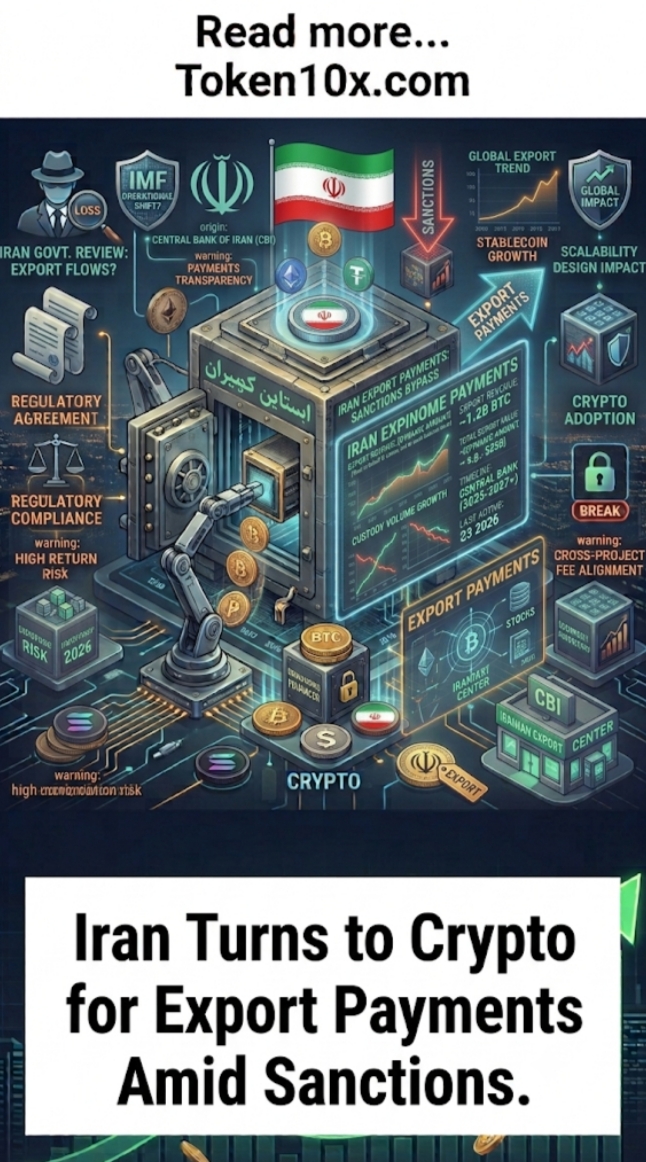
Iran has eased foreign-exchange controls and is tolerating the use of cryptocurrencies for export settlements as U.S. sanctions restrict conventional banking channels. The Financial Times reported that businesses are increasingly receiving payments in digital assets, particularly Tether’s USDT and bitcoin.
The shift is part of efforts to keep trade flowing and repatriate earnings under pressure.
The Drivers of This Development
According to the FT, Iran’s central bank has in recent months quietly encouraged traders to bring overseas funds home by available means, including through Iranian crypto exchanges. Sources familiar with the matter said receiving cryptocurrencies for exports has become established practice. USDT is described as the most commonly used asset for cross-border commercial payments, with bitcoin and other digital assets also employed. Under the more relaxed approach, companies can exchange foreign currency on the open market rather than at official rates and use export proceeds directly to finance imports without routing them through the official foreign-exchange system. One executive close to the regime noted that authorities no longer scrutinize the transfer method as closely. Blockchain analytics firm TRM Labs estimated nearly $10 billion in cryptocurrency volume moved through Iran in 2025. For perspective, the measures respond to long-standing exclusion from global payment systems and intensified sanctions pressure, turning crypto into a practical channel for sustaining external trade.
It is important to note the fundamental difference between formal, regulated cross-border banking and informal crypto-based settlement under sanctions: the latter prioritizes accessibility and reduced reliance on correspondent banks at the cost of greater exposure to enforcement actions, freezes, and secondary sanctions risks.
Impact and Broader Context
The reported policy relaxation helps Iranian exporters maintain commercial activity and access imports despite restricted traditional finance. At the same time, it heightens the visibility of Iran’s digital-asset sector to U.S. authorities, who have already sanctioned Iranian exchanges, designated related wallets, and frozen substantial amounts of USDT linked to sanctioned entities. Counterparties dealing with Iranian crypto flows face potential secondary sanctions exposure. The development also illustrates how stablecoins and bitcoin function as alternative rails for sanctioned economies seeking to circumvent banking barriers.
This development sparks important discussions about the role of cryptocurrency in sanctions evasion and resilience. Supporters of stricter enforcement argue that tolerating crypto settlement undermines the effectiveness of financial pressure and requires continued targeting of wallets, exchanges, and facilitators. Observers of the Iranian economy note that such channels have become a pragmatic response to structural isolation from global payments infrastructure. Analysts observe that the combination of official tolerance, local exchange infrastructure, and dollar-pegged stablecoins has normalized crypto use for trade in ways that earlier, more restrictive policies did not.
Looking ahead, the scale of crypto-based trade flows, further U.S. enforcement actions, and any official statements from Iranian authorities will shape how durable this channel remains. This analysis is based on the Financial Times report and related coverage of Iranian crypto activity and sanctions for accuracy and reliability. Official policy details and the precise volume of export settlements remain subject to limited transparency and ongoing developments.