

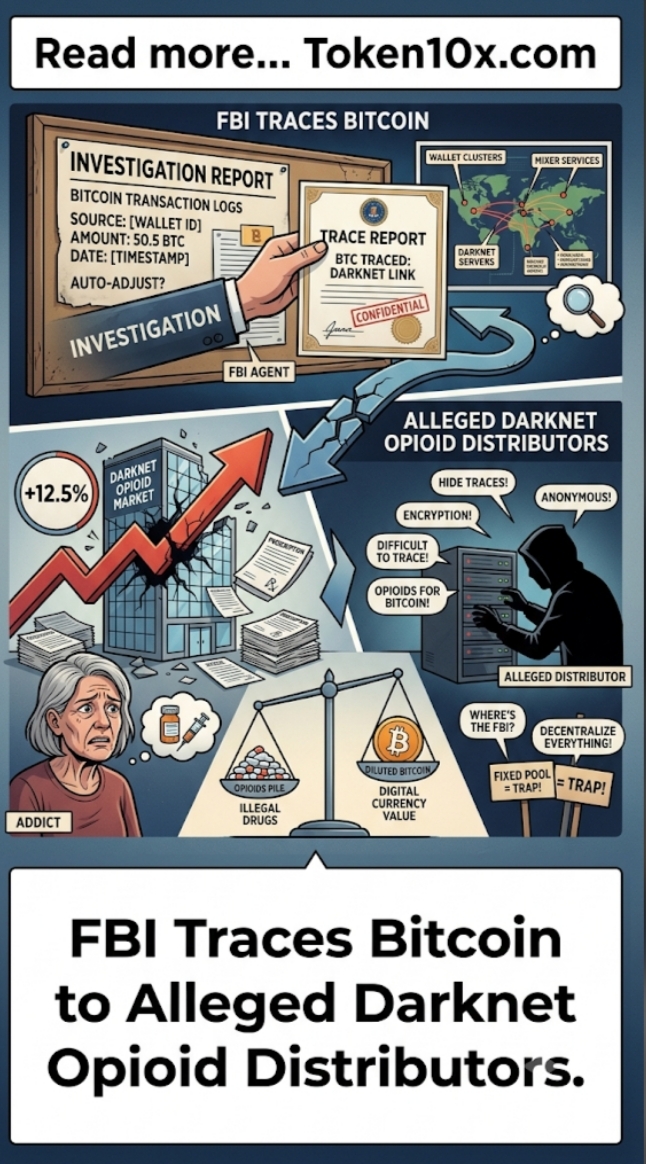
U.S. authorities have charged two Jacksonville brothers in connection with an alleged darknet opioid distribution operation after tracing Bitcoin transactions linked to the vendor account “BarbaraWhite.” The case centers on the sale of counterfeit pills containing highly potent synthetic opioids known as nitazenes.
Blockchain analysis played a central role in connecting darknet marketplace activity to the suspects.
The Drivers of This Development
Investigators identified several Bitcoin addresses allegedly used by the BarbaraWhite vendor account to receive proceeds from sales on darknet markets including Nemesis, Bohemia, and Abacus. The account had been active since at least 2020 and is accused of selling more than 95,000 counterfeit pills, many marketed as “FENT FREE” but later found to contain nitazenes, a class of synthetic opioids that can be more potent and dangerous than fentanyl. Blockchain analytics showed the associated wallet cluster received approximately $220,000 from darknet sources and sent out around $230,000, including payments to a postage service, another drug vendor, and a China-based chemical supplier. These on-chain links, combined with marketplace data, postal records, surveillance, and undercover purchases, helped investigators attribute the operation to brothers Vladislav and Stanislav Chernyshov. The activity has been connected to at least 12 overdoses across the United States, including fatalities. For perspective, the case illustrates how even relatively modest cryptocurrency flows from darknet drug sales can be mapped across multiple hops when combined with traditional investigative techniques.
It is important to note the fundamental difference between cash-based street-level drug distribution and darknet vendor operations that rely on cryptocurrency: the latter leaves a persistent, publicly auditable trail on the blockchain that can be analyzed months or years later, often providing critical attribution evidence.
Impact and Broader Context
The arrests disrupt a vendor linked to the distribution of highly dangerous synthetic opioids through multiple darknet markets. By successfully tracing Bitcoin from marketplace withdrawals to wallets connected to the suspects, the investigation demonstrates the practical value of blockchain analytics in narcotics cases. The operation’s scale—tens of thousands of pills over several years—and its association with overdoses underscore the public-health stakes of darknet opioid trafficking. The case also highlights ongoing challenges posed by vendors who market products as free of fentanyl while supplying more potent alternatives.
This development sparks important discussions about the dual role of cryptocurrency in illicit markets. Law enforcement officials point to successful tracing as evidence that blockchain transparency can aid investigations and deter some forms of cyber-enabled drug trafficking. Critics of heavy reliance on crypto-tracing note that sophisticated actors continue to use mixers, privacy tools, and layered transactions to increase complexity. Analysts observe that combining on-chain data with conventional evidence such as postal records and undercover work remains one of the most effective approaches currently available to investigators.
Looking ahead, further court proceedings against the charged individuals and any additional related seizures will determine the full impact of the case. This analysis is based on Department of Justice announcements, FBI investigative details, and blockchain analytics reporting for accuracy and reliability. The allegations remain subject to the judicial process.