

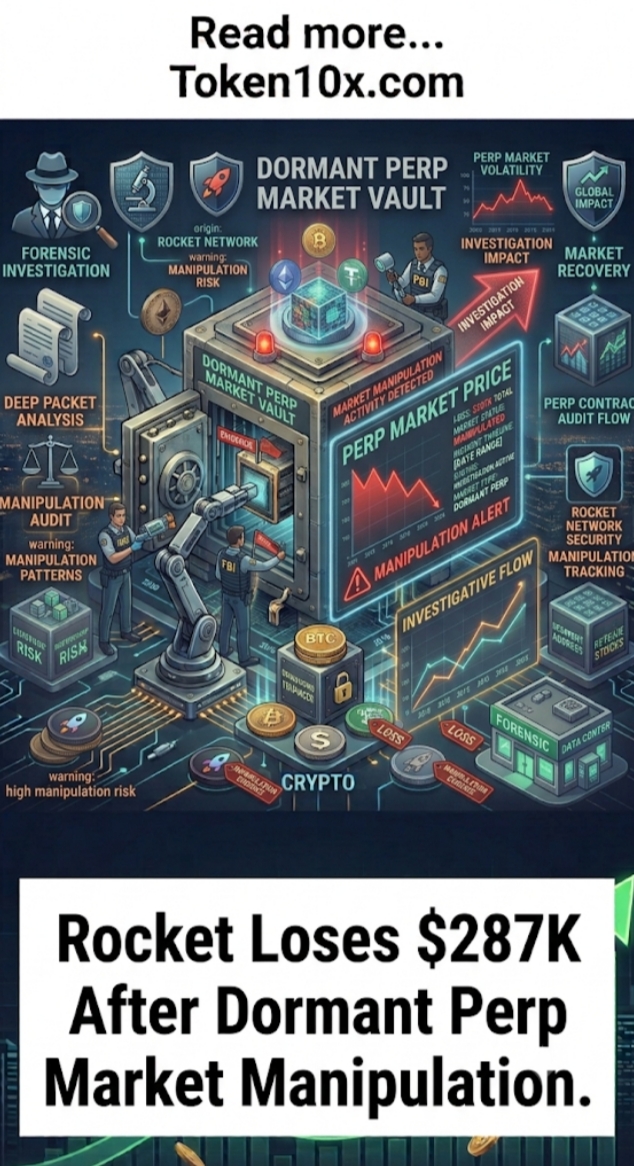
Rocket has suspended deposits, withdrawals, and trading after an attacker manipulated a dormant perpetual market and withdrew approximately $287,000. The incident occurred around 19:00 UTC on September 5.
The attacker used a burner account to create artificial profits through inflated orders and self-trades before extracting the funds via the platform’s Bridge.
The Drivers of This Development
The attacker targeted an inactive perpetual market that had seen little or no recent activity. Using a disposable account, they placed orders at artificially inflated prices and traded against themselves. This generated fake positive PnL in one account while driving the burner account into insolvency. The profitable account then successfully withdrew about $287,000 through the Bridge. Rocket described the episode as a manipulation of market mechanics rather than a traditional smart-contract vulnerability. In response, the platform paused all core functions while investigating. For perspective, low-liquidity or dormant markets on decentralized perpetual platforms can be more vulnerable to such self-trading and price-manipulation tactics when monitoring and safeguards are limited.
It is important to note the fundamental difference between exploits that drain funds through code vulnerabilities and those that abuse market design or insufficient activity controls: the latter can still result in socialized losses even when the underlying contracts function as written.
Impact and Broader Context
The $287,000 loss is expected to be socialized across the platform. Rocket is collaborating with security firms, law enforcement, exchanges, cross-chain bridges, and stablecoin issuers in an effort to track and freeze the stolen assets. A recovery plan is under development, with priority given to refunding smaller accounts. No timeline has been provided for the resumption of deposits, withdrawals, or trading. The incident highlights ongoing risks in decentralized perpetual markets, particularly those with thin order books or inactive pairs.
This development sparks important discussions about risk management in on-chain derivatives platforms. Supporters of rapid innovation argue that such incidents, while costly, drive improvements in monitoring and market safeguards. Critics point to the recurring vulnerability of low-activity markets and the challenges of preventing self-trading manipulation without introducing excessive centralization. Analysts observe that socializing losses and prioritizing small depositors is a common response in DeFi, but repeated events of this type can erode user confidence if prevention measures lag.
Looking ahead, the effectiveness of fund recovery efforts and the strength of any new safeguards Rocket implements will shape the platform’s ability to restore operations and trust. This analysis is based on Rocket’s official updates and contemporaneous reporting for accuracy and reliability. The final loss amount and recovery outcomes remain subject to ongoing investigation.