

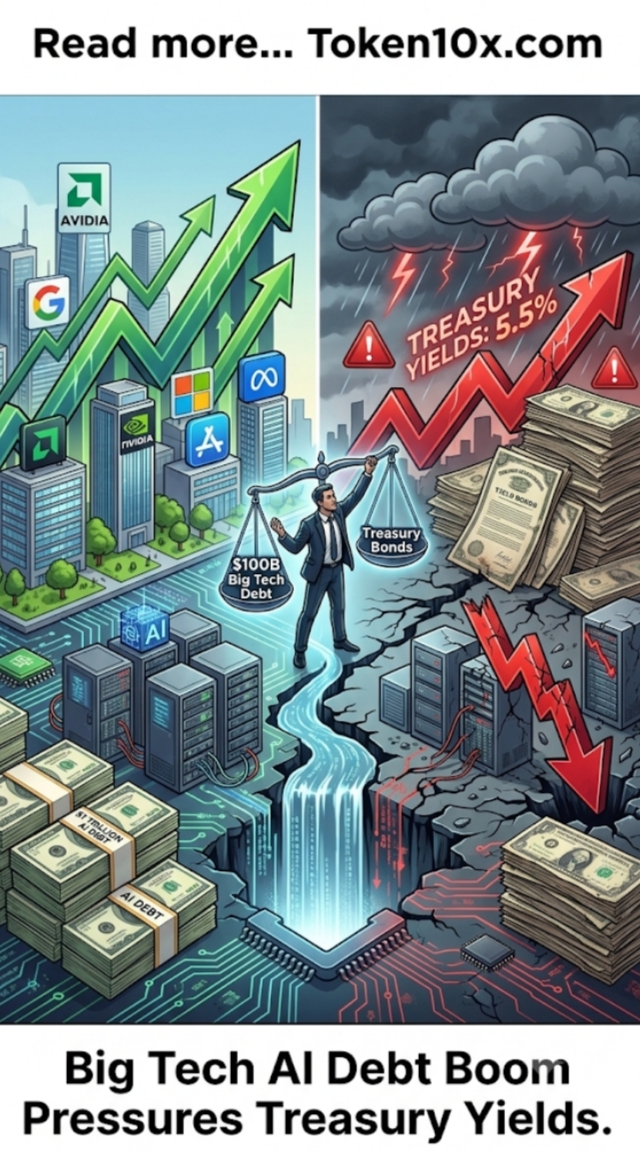
A market commentator has argued that surging bond issuance by Amazon, Meta, and other Big Tech firms for AI infrastructure is helping drive Treasury yields higher. The companies are increasingly competing with the U.S. government for long-term debt investors.
Combined Big Tech bond issuance, including special-purpose vehicles, is projected to reach a record $320 billion this year.
The Drivers of This Development
Major technology companies have sharply increased borrowing to fund massive AI-related capital expenditures on data centers, chips, and related infrastructure. Amazon, Meta, Alphabet, and Oracle alone issued substantial volumes of bonds earlier in the year, contributing to a broader hyperscaler debt surge. According to the analysis, this year’s projected $320 billion in Big Tech issuance marks a significant year-over-year increase and represents a meaningful share of overall long-term debt supply. As these highly rated corporate issuers tap the same investor base that buys Treasuries, they are said to be pulling demand away from government bonds and contributing to upward pressure on yields. For perspective, the 10-year Treasury yield recently reached levels not seen in over a year, while the 30-year yield hit multi-year highs amid the elevated corporate supply.
It is important to note the fundamental difference between traditional government borrowing to finance deficits and corporate borrowing by cash-generative tech giants to fund growth investments: both increase the supply of high-quality long-duration debt, but the latter reflects private-sector capital allocation toward AI rather than fiscal policy.
Impact and Broader Context
The rise in Big Tech debt issuance adds another source of upward pressure on long-term interest rates alongside federal deficits, inflation expectations, and monetary policy outlooks. Higher Treasury yields increase borrowing costs across the economy, including for the government itself, households, and other corporations. At the same time, the tech companies retain strong credit profiles, so the market has largely absorbed the supply, albeit with some widening in their credit spreads. The trend highlights how the scale of AI infrastructure spending is large enough to influence core fixed-income markets.
This development sparks important discussions about the macroeconomic side effects of the AI investment boom. Supporters of the spending view the debt issuance as a productive use of capital that should generate future growth and productivity gains. Critics warn that the volume of issuance is contributing to higher risk-free rates and could crowd out other borrowers. Analysts observe that Big Tech’s transformation from net cash generators into significant debt issuers marks a structural shift with implications for both credit markets and Treasury demand.
Looking ahead, the pace of further AI-related bond sales and the trajectory of government issuance will determine how persistent this pressure on yields remains. This analysis is based on market commentary and reported issuance data for accuracy and reliability. Yield movements remain subject to multiple macroeconomic factors beyond corporate supply.