

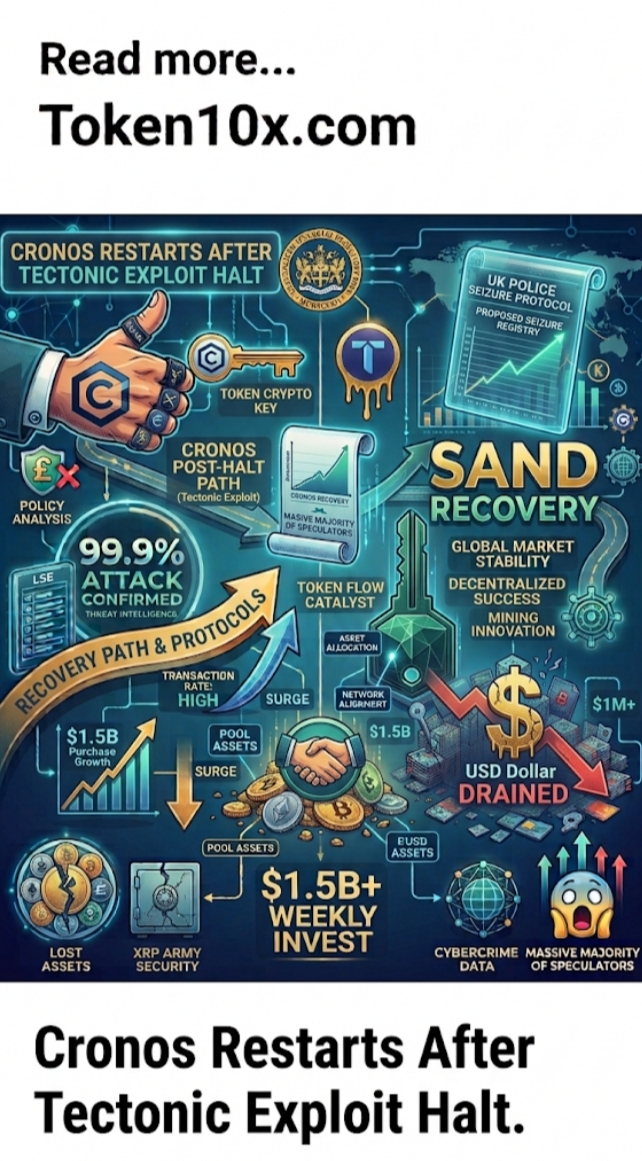
The Cronos network has resumed block production after validators halted the chain in response to an exploit on the Tectonic lending protocol. The restart included a rollback of the blockchain state to a point before the attack.
The incident occurred on August 30, 2026. An attacker manipulated the price of Tectonic’s low-liquidity TONIC token and used the inflated value as collateral to borrow other assets, with estimates of the affected amount ranging around $74–75 million. Only a portion of the funds was successfully bridged off-chain before the halt.
The Drivers of This Development
Tectonic, the largest lending protocol on Cronos by total value locked, accepted its own governance token as collateral despite limited liquidity. The attacker rapidly inflated TONIC’s price and borrowed against the manipulated valuation, a classic oracle or price-manipulation vector. Cronos validators coordinated an emergency consensus halt to prevent further drainage and outflows. They later restored the chain state to pre-exploit conditions, discarding thousands of blocks (including the attack transactions and contemporaneous legitimate activity), and restarted production from block 90,896,189. Officials described the action as a protective measure for users. For perspective, only approximately $6 million reached Ethereum before the freeze, leaving the majority of the exploited assets on the Cronos chain and subject to the rollback.
It is important to note the fundamental difference between a protocol-level exploit that can be contained by pausing a single application and a full network halt with state rollback: the latter prioritizes recovery of funds at the cost of temporary finality and the erasure of intervening transactions across the entire chain.
Impact and Broader Context
The network is back online and under observation, though some protocols, RPC providers, explorers, and bridges require additional time to fully restore service. Legitimate transactions that occurred in the discarded blocks were reversed along with the attacker’s activity. Crypto.com stated that its centralized exchange and app were unaffected. A full postmortem is expected.
This development sparks important discussions about the trade-offs between user protection and blockchain immutability. Supporters of the response argue that coordinated validator action limited irreversible losses and demonstrated the ability of a relatively concentrated validator set to act decisively in a crisis. Critics contend that rolling back the chain undermines the principle of finality and creates uncertainty for users whose transactions were erased. Analysts observe that incidents of this type highlight ongoing risks in DeFi protocols that accept illiquid collateral and the differing security models of Cosmos SDK-based chains versus more decentralized networks.
Looking ahead, the forthcoming postmortem and any compensation or remediation measures for affected users will shape longer-term confidence in the Cronos ecosystem. This analysis is based on official Cronos statements and contemporaneous on-chain reporting for accuracy and reliability. Final loss figures and recovery details remain subject to the pending postmortem.