

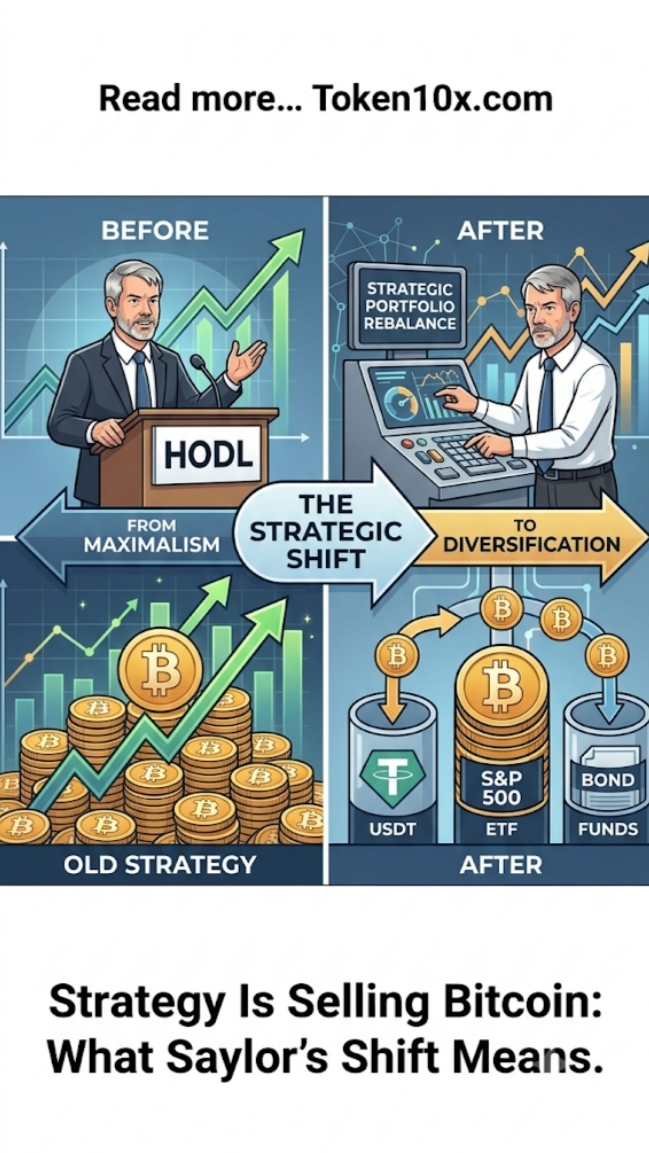
Strategy has begun selling Bitcoin after years of pure accumulation under Michael Saylor. The company sold 1,638 BTC for approximately $105 million last week, reducing its holdings to 842,138 coins.
This marks a clear pivot from the long-standing “never sell” corporate treasury strategy toward more active balance-sheet management.
The Drivers of This Shift
Strategy sold Bitcoin to fund preferred stock dividends, expand its USD cash reserve to $4 billion, and repurchase high-yielding STRC preferred shares. The sales come as Bitcoin trades below the company’s average cost basis of roughly $75,419 per coin.
For perspective, the volume sold remains small relative to total holdings, yet the directional change is significant after four years of continuous buying.
It is important to note the fundamental difference: the sales represent treasury and capital-structure management rather than a reversal of long-term Bitcoin conviction.
Impact and Broader Context
Strategy is simultaneously tracking Bitcoin’s 200-week moving average and maintaining a large remaining position. The moves aim to reduce expensive preferred dividend obligations while preserving flexibility during the current price environment.
This development sparks important discussions about the sustainability of corporate Bitcoin treasury models, capital structure risks, and active versus passive holding strategies. Supporters of the shift see it as pragmatic liability management. Critics view any sales as a departure from the original accumulation thesis.
Analysts observe that winner-take-most dynamics in corporate Bitcoin adoption are being tested by complex financing structures. Strategy’s actions may influence how other companies approach large digital asset holdings.
As further sales or reserve builds occur and Bitcoin’s price evolves, the company’s approach will continue shaping perceptions of the corporate treasury thesis. Liquidity management and long-term conviction will remain in tension.
This analysis is based on company disclosures and market reports for accuracy and reliability. Holdings and strategy remain subject to ongoing decisions and market conditions.