

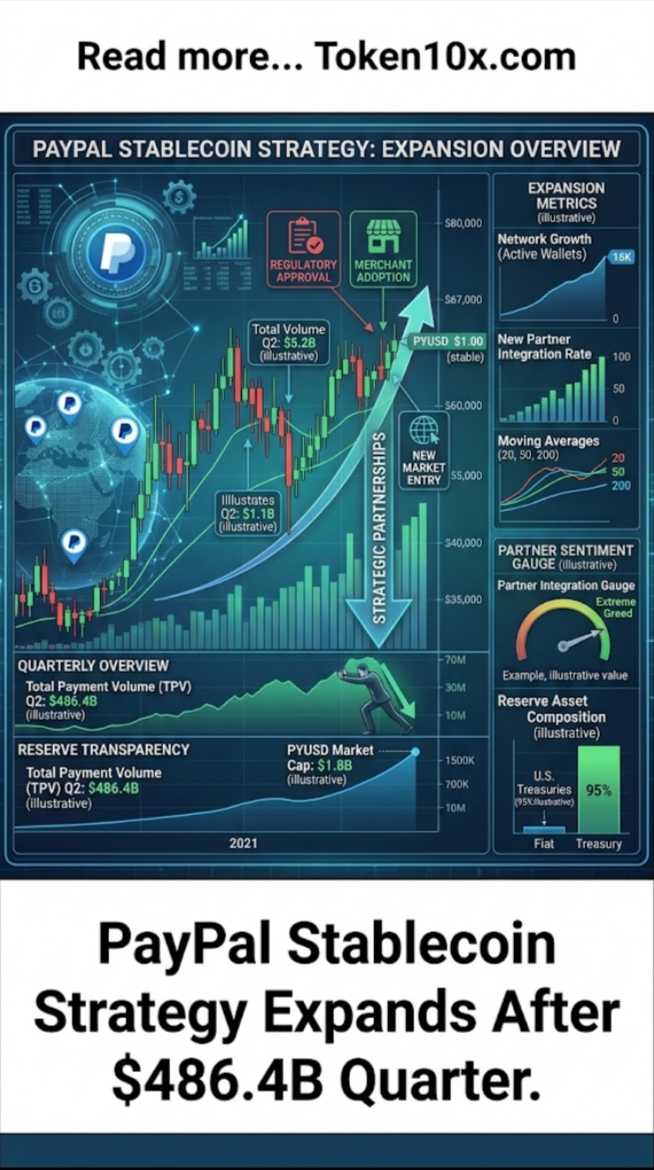
PayPal is expanding its stablecoin strategy following a robust $486.4 billion quarter. The payments company is ramping up efforts around its PYUSD stablecoin and related digital asset services.
This development signals PayPal’s deepening integration of cryptocurrency into its core payment ecosystem.
The Drivers of This Expansion
The strong quarterly volume of $486.4 billion provides a solid foundation for further investment in stablecoin infrastructure, partnerships, and user features. PYUSD is being positioned for broader use in payments, remittances, and on-chain applications.
For perspective, PayPal’s massive transaction scale gives it unique leverage to drive adoption of regulated stablecoins among mainstream users.
It is important to note the fundamental difference: traditional payment volumes generate processing fees, while stablecoin expansion focuses on creating new on-chain utility and ecosystem participation.
Impact and Broader Context
PayPal continues transitioning from a leader in digital payments to a significant player in the crypto and stablecoin space. The strategy aims to offer users seamless bridges between fiat and digital assets.
This expansion sparks important discussions about Big Tech’s role in digital finance, stablecoin regulation, and the convergence of traditional and decentralized systems. Supporters highlight potential gains in convenience and financial inclusion. Critics raise questions about market concentration and associated risks.
Analysts observe that winner-take-most dynamics in payments favor platforms with enormous scale and strong consumer trust. PayPal’s stablecoin push strengthens its position in an increasingly tokenized economy.
As the strategy unfolds and usage metrics emerge, PayPal’s efforts will likely influence broader industry trends. Sustained growth could solidify its role as a key gateway for mainstream stablecoin adoption.
This analysis is based on company reports and industry trends for accuracy and reliability. Performance figures remain subject to market conditions and regulatory factors.