

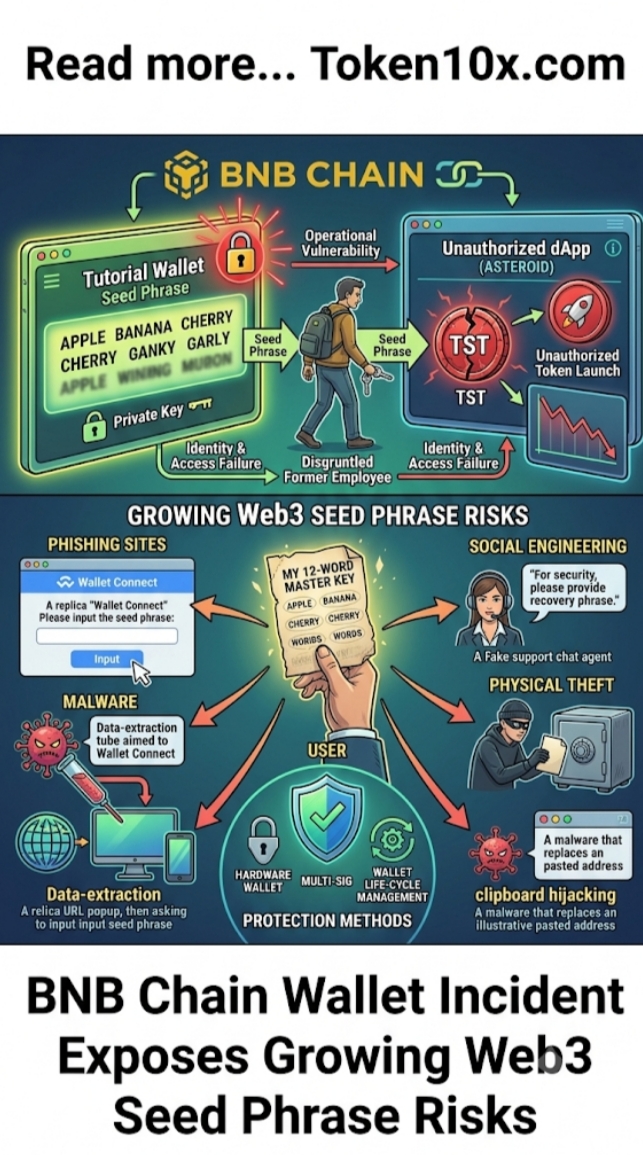
A recent incident involving BNB Chain wallets has exposed significant risks tied to seed phrase management in the Web3 ecosystem. The event highlights persistent vulnerabilities in how users handle recovery phrases for self-custodied assets.
This development underscores the challenges of maintaining security in decentralized environments where users bear full responsibility for their keys.
The Drivers of This Incident
The BNB Chain wallet incident reportedly stemmed from compromised seed phrases, enabling unauthorized access and fund drainage. Common attack vectors such as phishing, malware, and poor storage practices were key factors, revealing widespread user-side weaknesses.
For perspective, seed phrase-related breaches remain a leading cause of crypto losses because they grant complete wallet control without requiring ongoing technical exploits.
It is important to note the fundamental difference: seed phrases provide essential backup and recovery for decentralized wallets, while their exposure creates permanent and irreversible risk due to the immutable nature of blockchain transactions.
Impact and Broader Context
The incident has triggered community warnings and renewed calls for stronger seed phrase security habits. Users are being reminded of best practices including offline storage, avoidance of digital copies, and vigilance against social engineering.
This event sparks important discussions about Web3 security education, self-custody trade-offs, and the need for better user tools. Supporters of self-custody emphasize personal responsibility and improved wallet designs. Critics advocate for more accessible hybrid solutions to reduce human error.
Analysts observe that winner-take-most dynamics in wallet security favor solutions that minimize seed phrase exposure risks. Growing awareness may accelerate adoption of hardware wallets, multi-signature setups, and advanced recovery methods.
As the community responds and security practices evolve, the BNB Chain incident will serve as a valuable lesson. Enhanced education and technological safeguards will be critical to lowering seed phrase-related losses in Web3.
This analysis is based on security reports and industry trends for accuracy and reliability. Security incidents remain subject to ongoing investigations and user behavior.