

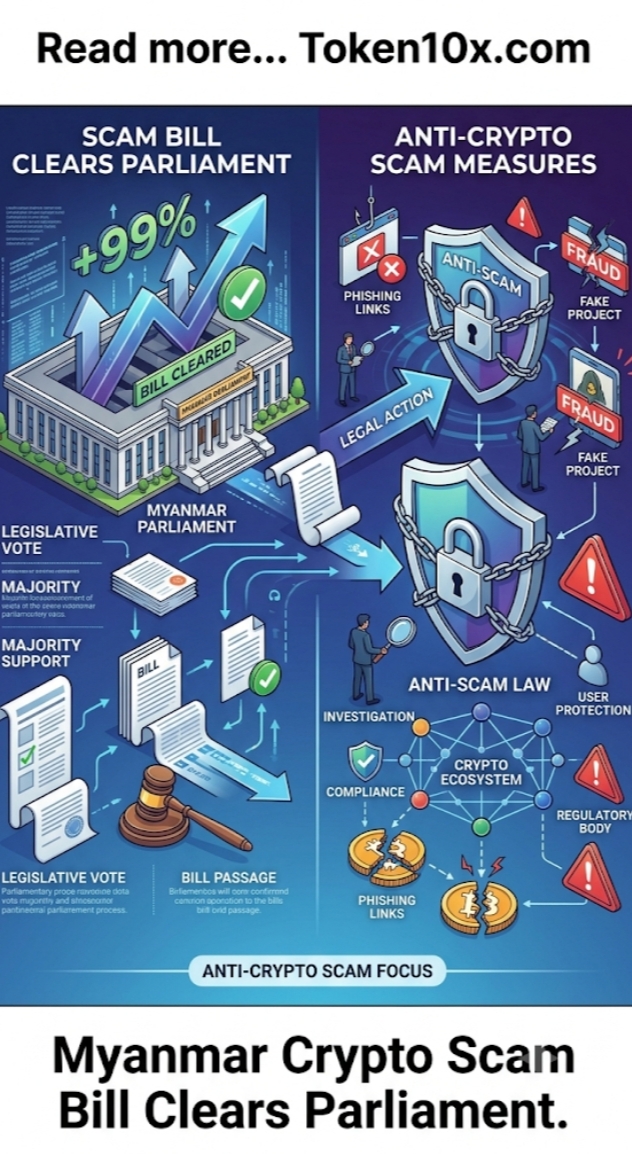
Myanmar’s parliament has passed a bill targeting cryptocurrency scams as part of efforts to combat digital financial fraud. The legislation introduces stronger oversight and penalties for deceptive schemes involving crypto assets.
This development signals increasing regulatory focus on protecting citizens from fraud in the country’s growing digital asset space.
The Drivers of This Legislation
Rising incidents of investment scams and fraudulent crypto schemes prompted lawmakers to approve the measure. The bill establishes clearer rules, licensing requirements, and enforcement tools aimed at curbing deceptive practices and safeguarding retail investors.
For perspective, Myanmar has experienced notable crypto activity alongside significant scam reports, leading authorities to address risks in a relatively under-regulated environment.
It is important to note the fundamental difference: the bill prioritizes consumer protection and fraud prevention, while cryptocurrency technology itself can support financial inclusion in areas with limited traditional banking access.
Impact and Broader Context
The new law is expected to increase scrutiny of crypto platforms and promoters operating in Myanmar. It may deter bad actors while providing a basic framework for legitimate digital asset activities.
This legislation sparks important discussions about balancing innovation with consumer safeguards, regulatory capacity in emerging markets, and responses to digital fraud. Supporters see it as an essential step to protect vulnerable populations. Critics may express concerns about overly restrictive rules that could limit positive economic uses.
Analysts observe that nations experiencing rapid crypto adoption frequently introduce protective legislation. Myanmar’s bill could influence similar initiatives across the region.
As implementation begins and enforcement actions take shape, the crypto scam bill will help define the future digital asset environment in Myanmar. Its success will depend on effective execution and adaptation to new threats.
This analysis is based on legislative reports and regional trends for accuracy and reliability. Impacts remain subject to enforcement details and potential future adjustments.