

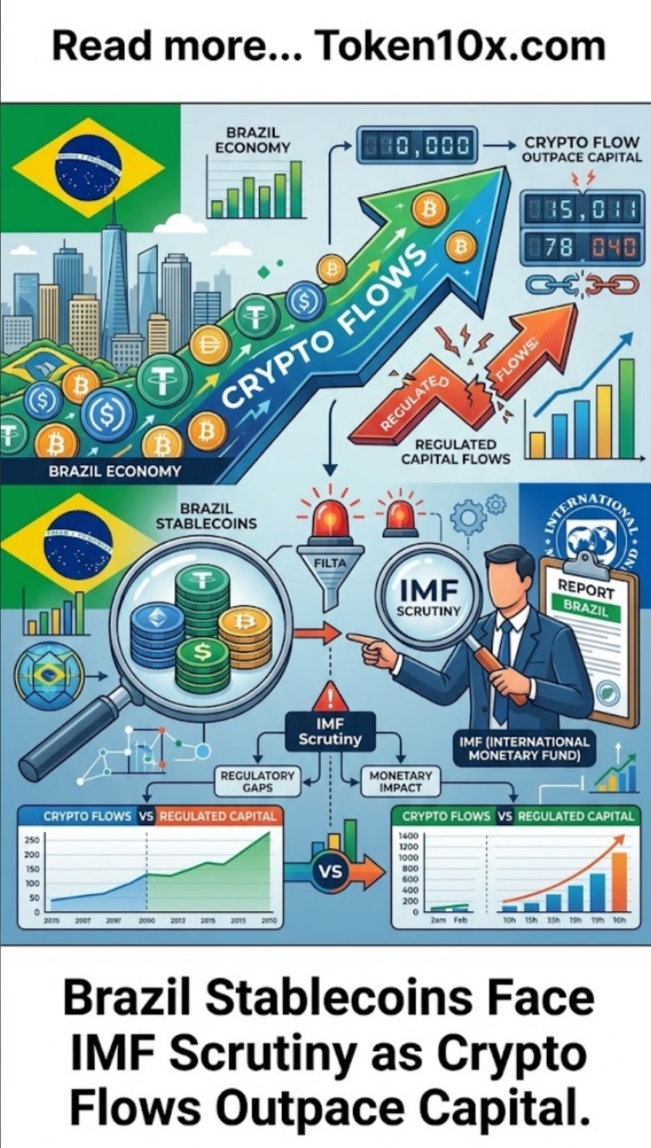
Brazil’s stablecoin ecosystem is facing increased scrutiny from the International Monetary Fund as crypto transaction volumes outpace traditional capital flows. The IMF is assessing potential implications for financial stability and monetary policy.
This development highlights the rapid expansion of digital assets in one of Latin America’s largest economies and the challenges for regulators.
The Drivers of This Scrutiny
Stablecoin adoption in Brazil has accelerated, enabling faster cross-border payments, remittances, and domestic transactions that sometimes bypass conventional banking rails. The IMF is examining risks related to capital flow volatility, anti-money laundering compliance, and effects on the central bank’s policy tools.
For perspective, crypto flows have grown substantially in Brazil, driven by high retail interest and practical use cases in a market with complex capital controls and inflation history.
It is important to note the fundamental difference: stablecoins provide efficiency and accessibility for users, while IMF scrutiny focuses on systemic risks, consumer protection, and macroeconomic implications.
Impact and Broader Context
Brazilian regulators have been navigating the balance between fostering innovation and maintaining oversight as the crypto sector expands. The IMF’s involvement brings an international perspective to domestic policy considerations.
This scrutiny sparks important discussions about digital currency regulation, financial inclusion, and monetary sovereignty in emerging markets. Supporters of stablecoins emphasize benefits for commerce and remittances. Critics stress the importance of strong safeguards against volatility and illicit use.
Analysts observe that winner-take-most dynamics in digital finance are accelerating in high-adoption countries like Brazil. The IMF review could help shape future regulatory approaches in the region.
As the assessment progresses and recommendations emerge, Brazil’s handling of stablecoins will influence its broader crypto framework. Finding the right balance between innovation and stability will determine long-term outcomes.
This analysis is based on international reports, market trends, and regulatory developments for accuracy and reliability. Policy directions remain subject to ongoing discussions.