

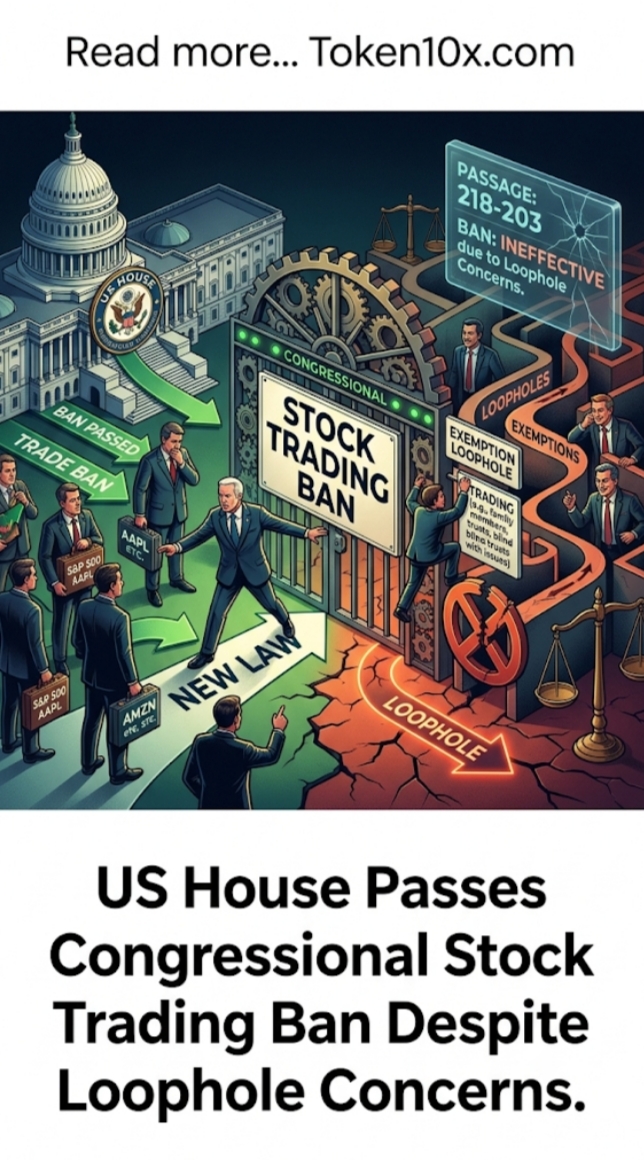
The US House has passed a bill banning congressional stock trading in an effort to reduce conflicts of interest among lawmakers. The legislation advances despite ongoing concerns about potential loopholes that could limit its effectiveness.
This development reflects mounting pressure to improve ethics standards and public trust in government.
The Drivers of This Legislative Action
Bipartisan momentum built around restricting individual stock trading by members of Congress and their immediate families, fueled by public scrutiny over unusual market performance and access to non-public information. The bill aims to minimize perceived advantages while allowing broader market index investments.
For perspective, congressional trading reform has been debated for years, with recent high-profile cases accelerating support. Passage in the House marks meaningful progress even as questions remain about enforcement and carve-outs.
It is important to note the fundamental difference: the ban focuses on personal financial activities of elected officials, while existing securities laws address insider trading for the general public and corporations.
Impact and Broader Context
The proposed restrictions would require lawmakers to divest individual stocks or use blind trusts, aiming to better align their decisions with public interest rather than personal gain. Critics argue loopholes involving spouses or delayed reporting could weaken the rules.
This legislation sparks important discussions about political ethics, transparency, and accountability. Supporters view it as a necessary step to restore confidence in Congress. Opponents worry it may be difficult to enforce without stronger mechanisms.
Analysts observe that such reforms reflect changing public expectations around political conduct amid widespread retail investing. The Senate’s action and final reconciled version will determine the ban’s real-world impact.
As the bill proceeds and implementation details are refined, the congressional stock trading ban will test lawmakers’ willingness to impose meaningful self-regulation. Long-term compliance and public perception will shape its legacy.
This analysis is based on legislative developments, public statements, and policy debates for accuracy and reliability. Outcomes remain subject to further congressional processes.