

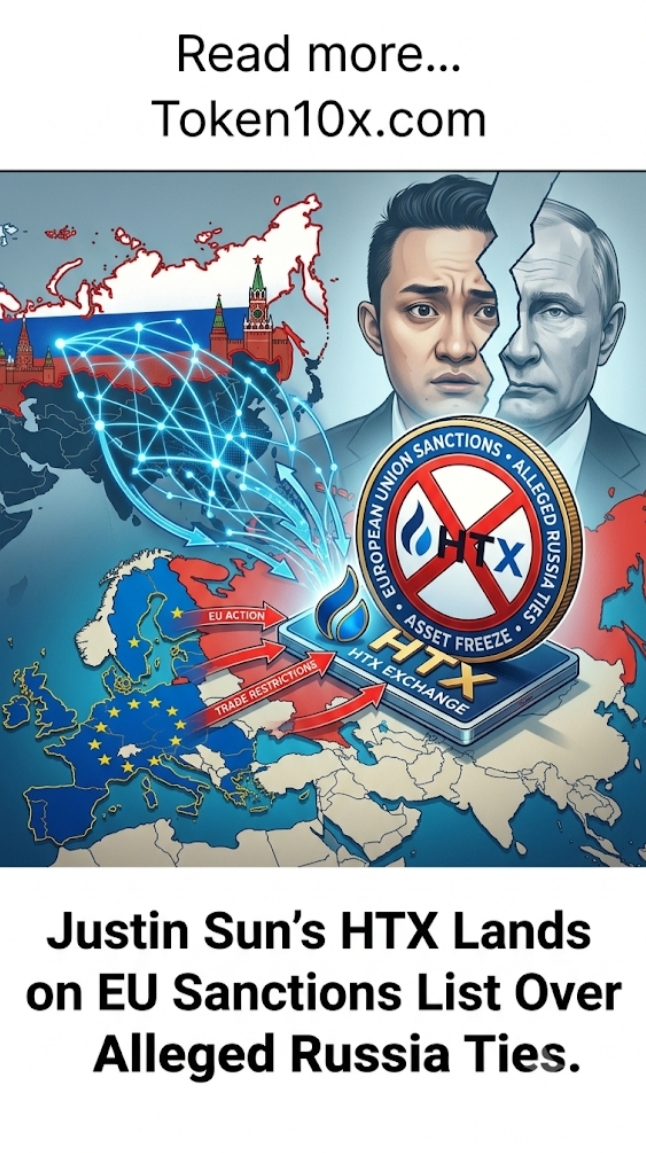
Justin Sun’s cryptocurrency exchange HTX has been added to the EU sanctions list over alleged ties to Russia. The designation imposes restrictions on the platform’s operations and financial interactions within the European Union.
This development marks a major regulatory setback for one of the crypto industry’s most prominent platforms and figures.
The Drivers of This Sanctions Decision
EU authorities pointed to suspected connections between HTX and Russian entities or activities that could undermine existing sanctions regimes. The listing seeks to prevent potential circumvention of restrictions on capital flows linked to Russia amid ongoing geopolitical developments.
For perspective, placement on sanctions lists can sharply limit access to banking partners, payment rails, and European users. HTX has operated as a major global exchange but now faces significant compliance and operational challenges in the bloc.
It is important to note the fundamental difference: sanctions focus on geopolitical risk and enforcement priorities, while the exchange primarily provides trading, custody, and liquidity services to crypto users.
Impact and Broader Context
Justin Sun has built HTX into an international platform with significant trading volume. The EU action forces the exchange to reassess its European strategy and may prompt users to seek alternatives.
This listing sparks important discussions about crypto exchanges’ compliance obligations, sanctions evasion risks, and the intersection of digital finance with geopolitics. Supporters emphasize the need to maintain pressure on restricted jurisdictions. Critics worry about overreach and impacts on legitimate users.
Analysts observe that major platforms face heightened scrutiny as regulators tighten oversight on cross-border flows. HTX’s response and any mitigation steps will be monitored closely by the industry.
As the situation develops and potential remedies are explored, the sanctions will shape HTX’s European presence and overall reputation. Future regulatory moves could influence similar platforms operating in tense geopolitical environments.
This analysis is based on official EU announcements, industry reports, and geopolitical context for accuracy and reliability. Developments remain subject to ongoing processes and potential challenges.