

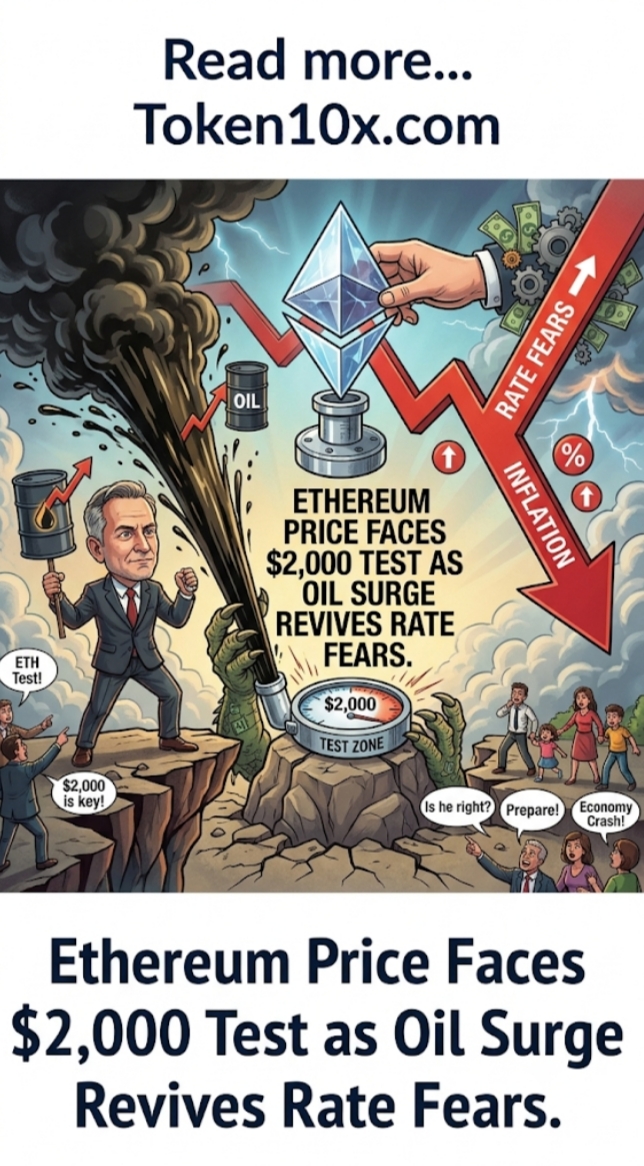
Ethereum’s price is facing a critical test around the $2,000 level as a surge in oil prices revives fears of sticky inflation and delayed interest rate cuts. The cryptocurrency is feeling pressure from shifting macroeconomic conditions.
This situation highlights the increasing correlation between traditional energy markets, monetary policy expectations, and digital asset valuations.
The Drivers of This Price Pressure
Rising oil costs have heightened concerns that inflation could persist longer than anticipated, potentially keeping interest rates elevated for an extended period. Ethereum and other risk assets tend to struggle in higher-for-longer rate environments due to increased opportunity costs and reduced liquidity.
For perspective, the $2,000 mark serves as a major psychological and technical support level for Ethereum. A decisive break below it could accelerate selling, while holding the level may attract buyers looking for a rebound.
It is important to note the fundamental difference: oil-driven rate fears act as a broad macro headwind, while Ethereum’s price is also shaped by on-chain activity, network upgrades, and ecosystem growth.
Impact and Broader Context
Ethereum remains the backbone of decentralized finance, smart contracts, and emerging Web3 applications. Macro influences have played a larger role in its recent price movements alongside fundamental developments.
This dynamic sparks important discussions about asset correlations, monetary policy impacts, and crypto market resilience. Supporters highlight Ethereum’s long-term technological advantages and utility. Critics note its vulnerability during risk-off periods.
Analysts observe that cryptocurrencies often move in tandem with other growth assets when rate expectations shift. Oil price volatility continues to be a key variable affecting near-term sentiment.
As oil markets fluctuate and upcoming economic data releases approach, Ethereum’s defense of the $2,000 level will be closely monitored. Network metrics and broader sentiment will influence its path forward.
This analysis is based on market data, macroeconomic trends, and industry reports for accuracy and reliability. Prices remain subject to significant volatility.