

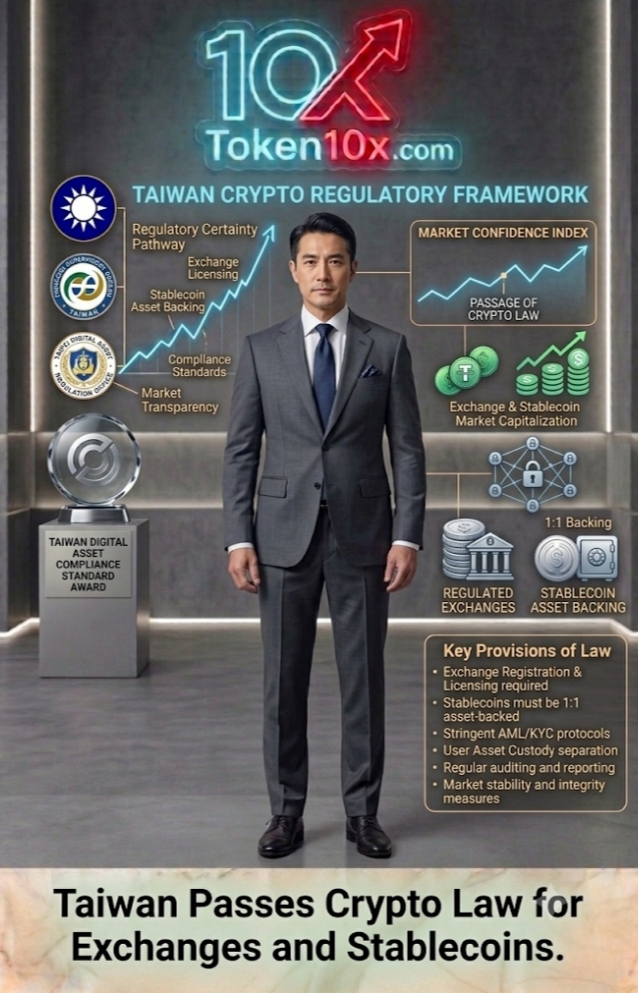
Taiwan’s legislature has passed comprehensive cryptocurrency legislation regulating digital asset exchanges and stablecoin issuance, marking a significant step toward formalizing the sector and enhancing investor protections. The new law establishes licensing requirements, operational standards, and oversight mechanisms for platforms operating in the island nation, positioning Taiwan as one of the more regulated crypto markets in Asia.
The legislation covers key areas including anti-money laundering compliance, consumer safeguards, capital requirements for exchanges, and specific rules for stablecoin issuers. It aims to balance innovation with financial stability while integrating Taiwan’s vibrant tech ecosystem more deeply into the global digital asset economy.
Key Provisions of the Law
Exchanges must obtain licenses from relevant authorities and implement robust know-your-customer and transaction monitoring systems. Stablecoin issuers face reserve requirements, redemption obligations, and restrictions on backing assets to ensure stability and minimize run risks. The framework also addresses custody, cybersecurity, and market integrity measures.
Lawmakers emphasized the importance of preventing illicit finance while fostering legitimate use cases for blockchain technology in payments, remittances, and decentralized finance. The law provides a clear pathway for both domestic and international operators to comply and serve Taiwanese users.
Strategic and Economic Context
Taiwan has a strong semiconductor and technology base, with significant interest in blockchain applications among developers and investors. The new regulatory clarity is expected to attract institutional participation and encourage innovation in areas such as tokenized assets and cross-border payments.
The move aligns Taiwan with global trends toward structured oversight of digital assets, following frameworks like the EU’s MiCA and evolving U.S. approaches. It may also strengthen Taiwan’s position in regional fintech competition, particularly with neighbors like Singapore and Hong Kong that have advanced crypto policies.
Broader Implications
For the cryptocurrency industry, Taiwan’s law provides another example of mature regulatory development in Asia. Exchanges and stablecoin projects planning regional expansion will likely view Taiwan as a more predictable jurisdiction, potentially increasing activity and liquidity.
Investors and users stand to benefit from higher standards of transparency and protection. However, smaller or non-compliant platforms may face challenges adapting to the new requirements, possibly leading to market consolidation.
The passage of the law reflects growing recognition by governments that digital assets require tailored regulatory approaches rather than outright bans or unregulated operation. Implementation details and enforcement mechanisms will be closely watched in the coming months as authorities issue secondary rules and guidance.
This development adds momentum to Asia’s role in shaping the future of digital finance. Taiwan’s crypto law could serve as a model for other jurisdictions seeking to harness blockchain benefits while mitigating associated risks. Market participants anticipate increased institutional inflows and product innovation following the regulatory milestone.