

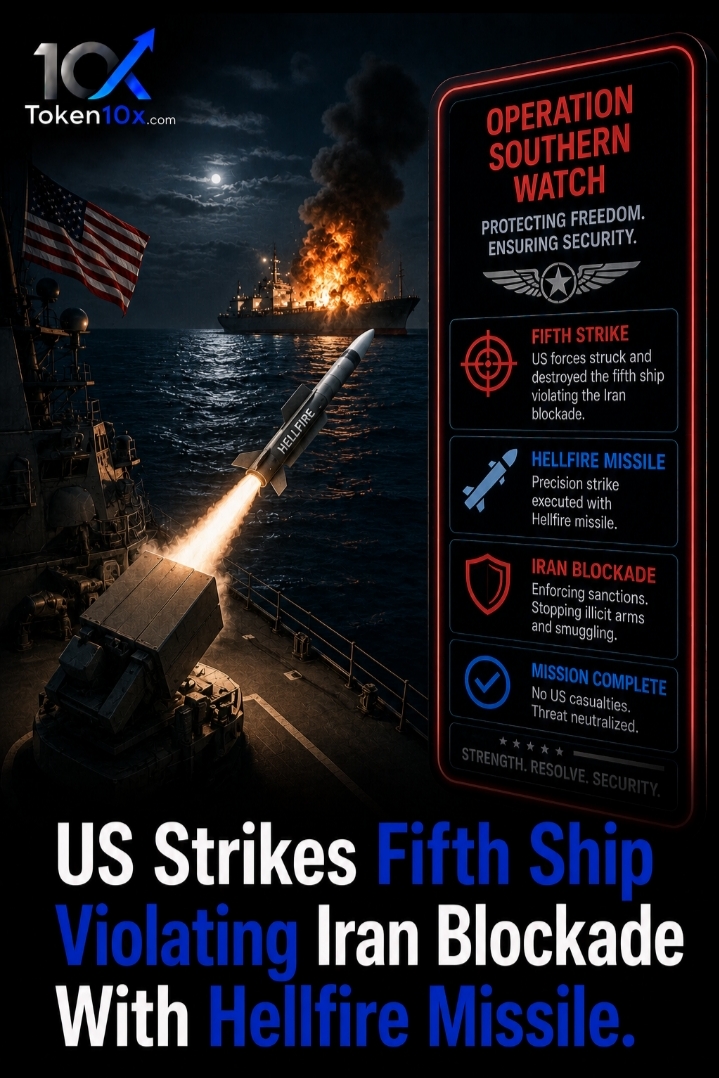
U.S. Central Command (CENTCOM) announced that American forces disabled a commercial vessel attempting to breach the naval blockade on Iran. The Gambia-flagged ship M/V Lian Star became the fifth vessel targeted in recent enforcement actions. A U.S. aircraft fired a Hellfire missile into the ship’s engine room after the crew ignored more than 20 warnings in international waters of the Gulf of Oman. The precision strike halted the vessel’s progress toward an Iranian port without reported casualties.
This latest incident underscores the Trump administration’s firm policy of enforcing the maritime blockade aimed at increasing economic pressure on Iran amid ongoing regional tensions and peace negotiations. CENTCOM stated that forces observed the ship transiting toward Iran, issued repeated verbal warnings, and took kinetic action only after clear non-compliance. The vessel is now adrift and no longer heading to its intended destination. Officials described the operation as a measured response to maintain the integrity of the blockade in a critical shipping corridor.
The blockade, part of broader efforts to restrict Iran’s maritime trade, has drawn international attention. Supporters argue it is a necessary tool to limit Tehran’s ability to fund destabilizing activities while diplomacy continues. Critics, including some maritime nations, express concern over risks to commercial shipping, potential escalation, and impacts on global energy markets. The repeated use of Hellfire missiles highlights a pattern of calibrated force designed to disable rather than destroy, minimizing humanitarian risks while sending a strong deterrent message.
Reactions have been mixed across diplomatic and defense circles. Allies in the Gulf region largely support the enforcement actions as essential for regional security. Others call for greater transparency and de-escalation to prevent miscalculations in the volatile Strait of Hormuz area. Iran has condemned the strikes as aggressive violations of international law, while the U.S. maintains the operations are lawful measures in international waters to uphold the blockade.
As enforcement continues, this development reflects the high stakes involved in managing maritime security during a period of heightened tensions. The coming weeks will be critical in determining whether such actions pressure Iran toward meaningful concessions or lead to further confrontations at sea.
For more analysis and latest insights, visit https://token10x.blog and explore the full platform at https://token10x.com.
The narrative around the U.S. strike on the fifth violating ship highlights a firm yet controlled approach. While the blockade enforcement demonstrates resolve and effectiveness, it also carries risks of escalation and broader economic consequences. Success will ultimately depend on balancing pressure with diplomatic pathways to achieve lasting stability in the region.