

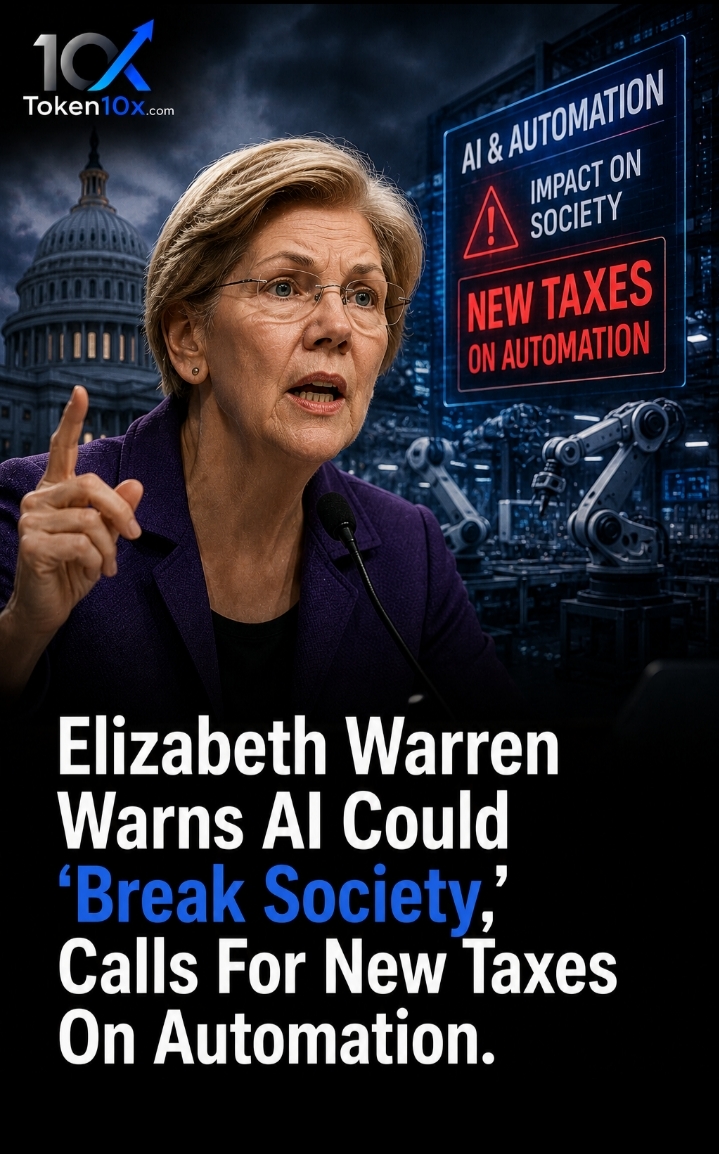
In a strong policy statement, Senator Elizabeth Warren has warned that artificial intelligence could ‘break society’ and called for new taxes on automation. The remarks, delivered in late May 2026, have ignited fresh debates about the regulation of emerging technologies and their impact on workers and the economy.
Warren highlighted the rapid advancement of AI systems and their potential to displace millions of jobs across sectors. She argued that without aggressive intervention, widespread automation would exacerbate inequality, hollow out the middle class, and create social instability. Her proposal includes new taxes on companies deploying automation technologies to fund worker retraining programs and social safety nets.
Several factors appear to have shaped Warren’s position. Rising concerns over job losses in industries like manufacturing, customer service, and creative fields, combined with recent high-profile AI deployments, have intensified calls for government action. Warren emphasized the need to address power concentration among a few tech giants and ensure the benefits of AI are broadly shared rather than concentrated among executives and shareholders.
This stance aligns with Warren’s long-standing advocacy for stronger regulation of big business and wealth redistribution. Critics argue that such taxes could slow innovation and hurt America’s global competitiveness in AI development, while supporters view it as a necessary response to technological disruption.
The news has sparked lively debates across political and tech communities about Elizabeth Warren’s AI warnings. Some view it as a concerning signal that could lead to overly burdensome regulations and stifle technological progress. Others regard it as a timely call to protect workers and prevent unchecked corporate power in the age of automation.
Senator Warren’s comments do not indicate opposition to artificial intelligence as a whole. She has acknowledged AI’s potential benefits in healthcare, science, and productivity. Still, it reignites conversations around technological unemployment, ethical AI development, and the appropriate role of government in managing economic transitions.
For more AI regulation analysis and latest tech policy insights, visit Token10x Blog https://token10x.blog and explore Token10x https://token10x.com.
As policymakers grapple with the societal effects of rapid technological change, this development provides nuance: while concerns about AI breaking society are being raised at the highest levels, the path forward requires balancing innovation with worker protections. Businesses and investors should perform their own research and monitor legislative trends, recognizing that policy proposals do not always translate into immediate law.
This latest intervention by Elizabeth Warren may influence the direction of upcoming AI and automation legislation in Congress. The coming months will reveal whether her calls for new taxes gain traction or face resistance in a divided political landscape.