

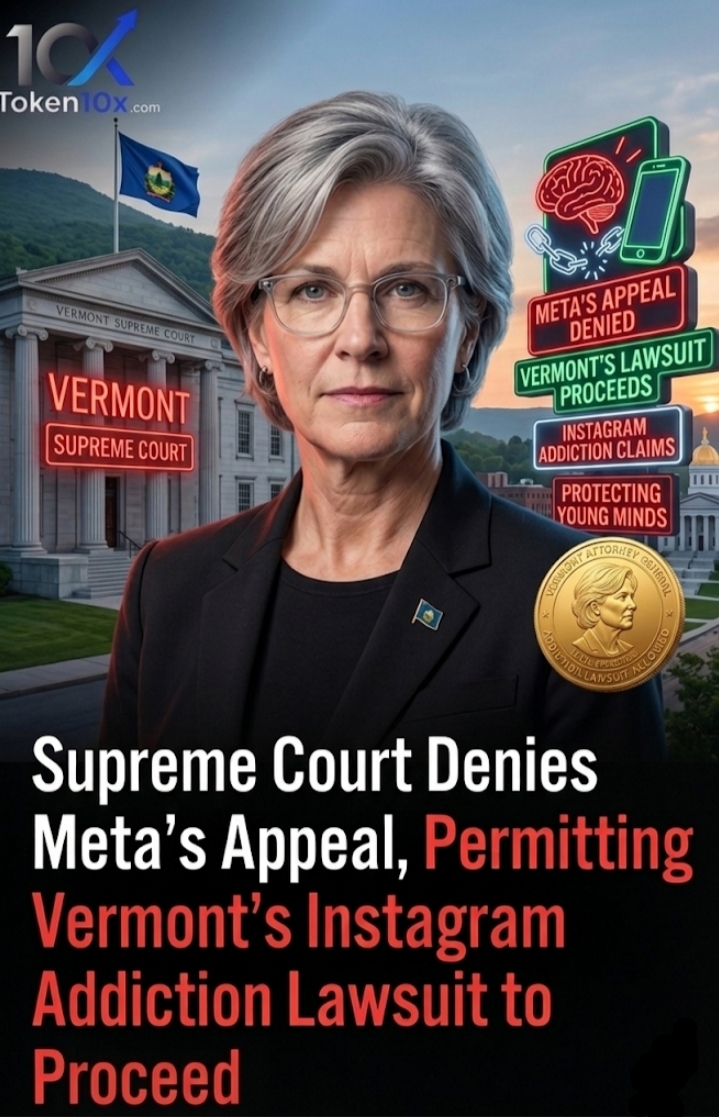
In a landmark decision with major implications for Big Tech, the Supreme Court has denied Meta’s appeal, allowing Vermont’s Instagram addiction lawsuit to proceed. The ruling in late May 2026 has triggered widespread discussion about social media accountability and the potential liability of platforms for user harm.
The Supreme Court’s denial means Vermont can move forward with its case alleging that Meta designed Instagram features to exploit addictive behaviors, particularly among young users. The lawsuit claims Meta knowingly used addictive algorithms, notifications, and design elements that contributed to mental health issues, anxiety, and depression in minors.
Several factors appear to have influenced the Supreme Court’s decision. Growing evidence from internal documents, whistleblower testimonies, and public health studies highlighted the harmful effects of prolonged Instagram use on adolescents. Vermont’s strong consumer protection laws and the state’s focus on protecting children from social media harms played a key role, as courts increasingly recognize the need for platforms to address foreseeable risks.
This ruling contrasts with Meta’s long-standing defense that it provides tools for parental controls and that users bear responsibility for their own engagement. Vermont argues Meta prioritized engagement and profits over user well-being, especially through features targeting teen attention.
The news has sparked lively debates across tech and legal communities about the Supreme Court Meta appeal outcome. Some view it as a concerning signal that could open the floodgates for similar addiction lawsuits nationwide. Others regard it as a necessary step toward greater platform responsibility and stronger safeguards for vulnerable users.
The Supreme Court’s decision does not indicate a broad rejection of social media innovation. Meta continues to develop new features and defend its practices in multiple jurisdictions. Still, it reignites conversations around digital addiction, algorithmic accountability, and the balance between free speech and consumer protection.
For more tech regulation analysis and latest digital insights, visit Token10x Blog https://token10x.blog and explore Token10x https://token10x.com.
As courts examine the societal impact of social platforms, this development provides nuance: while Vermont’s Instagram addiction lawsuit advances, the broader legal landscape for tech companies remains complex. Investors and businesses should perform their own research and monitor regulatory trends, recognizing that individual court rulings do not always dictate long-term industry outcomes.
This Supreme Court decision may set an important precedent for social media liability cases. The coming months will reveal how the Vermont lawsuit unfolds and whether it influences similar actions in other states.