

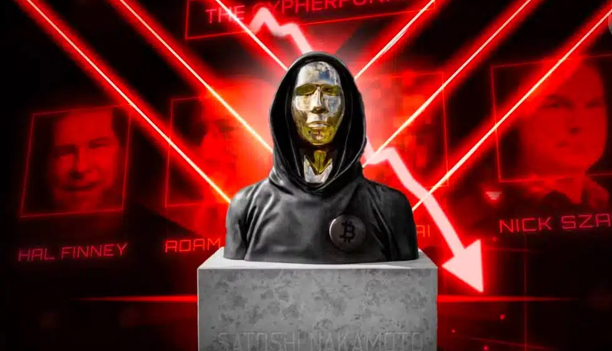
In the shadowy annals of cryptocurrency lore, Satoshi Nakamoto—the enigmatic architect of Bitcoin—stands as the ultimate ghost in the machine. The pseudonymous genius who unleashed the world’s first decentralized currency in 2009 vanished without a trace in 2011, leaving behind an untouched digital vault estimated at 1.1 million BTC. At the cryptocurrency’s euphoric October peak of $126,000, that hoard ballooned to a staggering $138.6 billion, briefly crowning Nakamoto as the planet’s richest recluse, outstripping tech titans like Elon Musk. But as of November 24, 2025, a merciless market rout has slashed Bitcoin’s value by over 30%, dragging Satoshi’s paper wealth down to $96.3 billion. In mere weeks, the founder’s fortune has hemorrhaged $42.3 billion—more than the GDP of Iceland—highlighting the volatile alchemy of crypto dreams and nightmares.
The carnage began in earnest last month, when Bitcoin, riding a wave of post-election optimism under President Trump’s pro-crypto administration, shattered records. Institutional inflows via spot ETFs, regulatory green lights for token funds, and whispers of a “digital gold rush” propelled the asset skyward. BlackRock’s iShares Bitcoin Trust alone amassed billions, while Harvard University quietly tripled its stake to $443 million, betting on BTC as a hedge against fiat fragility. Yet, euphoria proved fleeting. By mid-November, the digital darling plummeted below $89,000 in a single 24-hour bloodbath, erasing $800 billion from the broader crypto market cap and thrusting Bitcoin into official bear territory—a drop exceeding 20% from highs.
What ignited this inferno? Analysts point to a toxic cocktail of macroeconomic tremors. First, Federal Reserve jitters: With U.S. labor data softening and inflation stubbornly sticky, traders slashed bets on December rate cuts from 90% to a shaky 60%, per CME FedWatch tools. Higher-for-longer interest rates squeeze speculative plays like Bitcoin, forcing investors to flee to safer havens such as Treasuries, which have outperformed BTC year-to-date. Second, the AI bubble’s burst: Overhyped tech valuations, exemplified by Nvidia’s earnings miss on November 19, triggered a risk-off exodus. Crypto, often the “high-beta” canary in the coal mine, amplified the pain, with correlations to Nasdaq stocks spiking to 0.85.
Compounding the chaos were internal crypto frailties. Leveraged positions on platforms like Coinbase—now offering up to 10x futures—unraveled in a cascade of $2 billion in liquidations, as margin calls forced algorithmic sell-offs. Deutsche Bank strategists warned of “further waves of forced selling,” with retail traders liquidating equities to cover crypto debts. The total market shed $1 trillion since October 7, per FxPro data, marking the sector’s worst monthly slide since the 2022 FTX implosion. Ethereum and altcoins fared worse, down 35% and 40%, respectively, as Bitcoin’s dominance briefly surged to 58%.
Yet, amid the rubble, glimmers of resilience emerge. On-chain metrics from Glassnode reveal that 2025’s average buyer, who entered at $103,227, is now nursing a 13% loss—but historical patterns suggest this is par for the course. Bull markets typically endure five such 20-30% corrections, and Bitcoin has rebounded from steeper dives before. Long-term holders, dubbed “HODLers,” control 75% of supply, unmoved by the frenzy. Institutional heavyweights like MicroStrategy scooped up 8,178 BTC at $102,171 apiece during the dip, signaling conviction in scarcity post-2024 halving.
Looking ahead, sentiment teeters on a knife’s edge. Bloomberg Intelligence’s Mike McGlone floats a doomsday scenario: If a global recession guts the S&P 500 to 4,000, Bitcoin could crater to $10,000—a 88% wipeout echoing 2018’s winter. More optimistically, CoinCodex forecasts a 9.5% rebound to $95,680 by December, buoyed by renewed rate-cut hopes from Fed Vice Chair Williams’ dovish remarks. Ark Invest’s Cathie Wood, ever the bull, eyes $200,000 by mid-2026, citing Bitcoin’s evolution into a sovereign asset class.
Satoshi, wherever they lurk—in a forgotten server farm or beyond—watches impassively. Their coins, mined in Bitcoin’s infancy on clunky laptops, haven’t budged since 2010, a testament to the protocol’s ironclad ethos: Don’t trust, verify. This $42 billion “loss” is illusory; no fiat has changed hands, no empires crumbled. For the rest of us, it’s a stark reminder: In crypto’s wild frontier, fortunes forge and fracture overnight. As Bitcoin hovers at $87,500 today, the question lingers—buy the dip, or brace for the abyss? History favors the bold, but only the patient inherit the blockchain.