

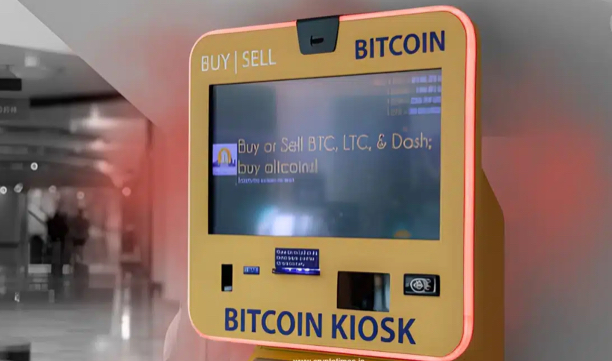
The U.S. Department of Justice (DOJ) has brought federal charges against Firas Isa, the 36-year-old founder and CEO of Virtual Assets LLC, for allegedly laundering more than $10 million in illicit proceeds through cash-to-cryptocurrency ATMs.
The company, which does business as Crypto Dispensers, operates Bitcoin ATMs in convenience stores, gas stations, and currency exchanges across the United States.
According to the court filing unsealed in the Northern District of Illinois, criminals and fraud victims sent millions of dollars in cash, proceeds from wire fraud and narcotics offenses, to Isa’s Crypto Dispensers ATMs.
Prosecutors allege that Isa converted these funds into cryptocurrency and then transferred them into virtual wallets to “disguise the true source and ownership” of the money.
The charges claims that Isa was aware that these funds were derived from fraudulent activity. Isa and Virtual Assets LLC have been charged with one count of money laundering conspiracy, which carries a maximum sentence of 20 years in prison.
They have both pleaded not guilty, and a status hearing is scheduled for January 30, 2026, before U.S. District Judge Elaine E. Bucklo.
This case points to a loophole in crypto ATM networks that can be potentially dangerous. Bitcoin ATMs are typically supposed to comply with the know-your-customer (KYC) regulations to prevent money laundering, yet prosecutors allege that Isa did not do so, and criminals pumped illegal money into the financial system.
The scheme supposedly concealed the source of the dirty money by laundering it through digital wallets, which converted dirty money into crypto.
Beyond the legal risk for Isa, the case brought attention to the physical crypto infrastructure, such as ATMs, as something that can be misused by bad actors.
The timing of the charges comes amid a major transformation in how the U.S. government approaches crypto crime. In April 2025, the DOJ disbanded its National Cryptocurrency Enforcement Team (NCET), which had been created to prosecute crypto-related financial crime.
According to a memo from Deputy Attorney General Todd Blanche, prosecutors will now prioritize cases involving serious criminal misuse of digital assets, such as terrorism, narcotics, and organized crime, rather than policing exchanges, (tools that obscure transaction history), or cold wallets (wallets that store private keys offline).
In parallel, the DOJ has launched a “Scam Center Strike Force” in Washington, D.C., aimed at crypto investment fraud by overseas criminal syndicates, notably those operating out of Southeast Asia.
The strike force, involving the DOJ, Federal Bureau of Investigation (FBI), Secret Service, and treasury agencies, has already seized more than $400 million in cryptocurrency from scam networks, including so-called “pig butchering” operations. Pig butchering is a scam where criminals gain a victim’s trust, often romantically, to persuade them to make large investments into fake crypto platforms before stealing all of it.
Impact and risks ahead
If convicted, Isa and his company can be ordered to relinquish property related to the supposed laundering and prosecutors might seek alternative property in case of the impossibility of recovering original money.
The case could also trigger tighter regulatory scrutiny of Bitcoin ATM operators, raising questions about how effective current AML (anti–money laundering) controls are in practice, especially for cash-based crypto services.
At a larger scale, the charges highlights a significant conflict in the U.S. crypto policy. While the DOJ is stepping back from broad “regulation-by-prosecution” strategies, it still maintains a strong commitment to cracking down on illicit use of digital assets.
The formation of the Scam Center Strike Force signals that the federal government is not abandoning crypto enforcement but focusing it more sharply on cross-border crime, fraud, and money laundering.
The court hearing on January 30, 2026, will be highly monitored to determine the way the case is going, and whether more information will be provided regarding the alleged scheme.
This case can be used by regulators, industry players, and legislators to discuss the changes to the regulation of crypto ATM and AML compliance.
The new strike force at DOJ might still be able to provide high profile enforcement efforts, especially against foreign scam networks, which increases the stakes of crypto users and infrastructure providers.
The development is a reminder that despite the change in legal frameworks surrounding crypto, conventional enforcement mechanisms, indictments, money laundering charges, and criminal investigations, are still very much in play.