

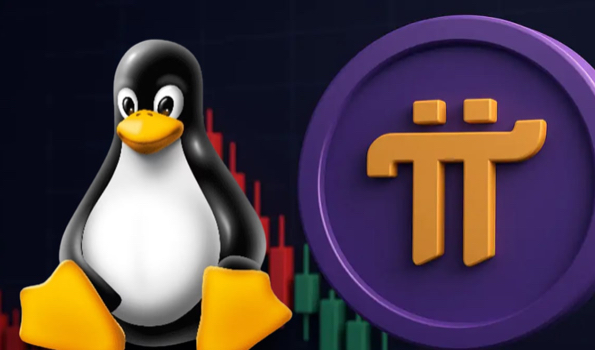
Pi Network is entering a decisive moment as the project rolls out key upgrades while traders eye price signals. The PI token trades at $0.3483, up 1.6% daily, with a $2.77 billion market cap and trading volume surging 118.86% to $59.4 million, according to coinmarketcap. Besides, Pi’s ecosystem now expands with a Linux version of its Node software, a move seen as crucial for decentralization.
Despite the progress, Pi’s price movement seems a bit uncertain. As per TradingView data on a four-hour chart, Pi is currently trading around $0.3489, which is a slight dip of 0.40%. The 50-day moving average sits at $0.3514, which is holding back any upward movement, while the 200-day is at $0.3843 is still looming above.
According to the data, Pi briefly surpassed $0.46 early this month but was unable to sustain that momentum, falling back below the moving averages. The coin has been fluctuating between $0.33 and $0.37 ever since, which indicates market hesitancy.
Crypto analyst Nftrustless in his latest post on X noted, “Pi Coin shows bullish divergence on RSI. Last time this happened, it pumped ~40%.” He added that holding $0.33 support could send Pi back to $0.46, while a drop below $0.32 signals bearish risk. Hence, traders brace for a big move.
Social Buzz and Market Sentiment
Meanwhile, data from the crypto analytics platform Santiment indicates that Pi’s momentum is starting to wane. Engagement levels hit their highs in March, May, and July, giving prices a temporary boost before they started to drop again.
By the end of August, both social dominance and volume had decreased, reflecting the diminishing traction of Pi’s price. The Network is making progress with new technology, but its price remains shaky. The Linux Node launch adds strength, yet real growth will only come if the market shows more confidence.
As per the official blog, the Linux edition simplifies installation, maintenance, and updates, aligning the network with systems used by partners and exchanges. Until now, Pi Nodes only supported Mac and Windows, forcing Linux users into custom builds.
The release synchronizes with the community’s previously expressed needs and with the support of Pi’s infrastructure.