

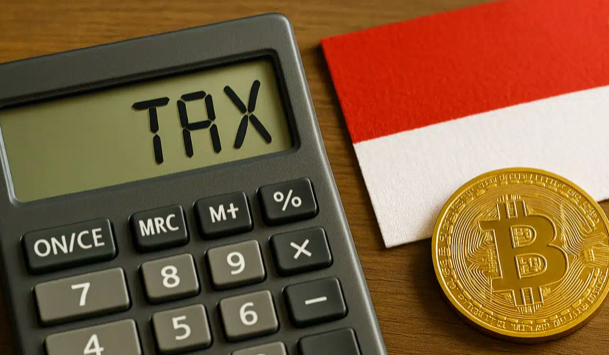
Indonesia’s Ministry of Finance will implement increased cryptocurrency taxation rates starting August 1, 2025, significantly raising costs for crypto traders using foreign exchanges while reducing buyer fees and restructuring mining taxes.
As reported by Reuters, the new tax framework increases seller transaction fees on foreign crypto exchanges from 0.2% to 1.0%, while domestic exchange seller fees rise from 0.1% to 0.21%. The changes affect Indonesia’s estimated 14 million cryptocurrency users, representing the country’s largest crypto tax policy revision since digital assets gained legal trading status.
The transaction tax for Domestic Exchange Sellers has increased from 0.1% to 0.21% per trade, representing a 110% rate increase. While tax for Foreign Exchange Sellers has jumped from 0.2% to 1.0% per transaction for international crypto platforms like Binance, Coinbase, and other overseas exchanges.
In addition, the previous value-added tax (VAT) of 0.11% to 0.22% per transaction for cryptocurrency buyers has been completely removed under the new framework. This new tax structure creates significant cost advantages for using domestic Indonesian exchanges over international platforms, potentially driving trading volume to local operators.
Effective Immediately, VAT on cryptocurrency mining operations doubles from 1.1% to 2.2% starting August 1, 2025. The current 0.1% special income tax on mining operations will be eliminated in 2026, with mining income shifting to Indonesia’s standard income tax system.
Post-2026 mining income will be taxed under either personal income tax rates or corporate tax rates depending on the operational structure, potentially creating significant tax variations based on business organization.
A local media outlet recently reported that Indonesia’s cryptocurrency user base has reached 14 million, exceeding the country’s stock market investor population and making the tax changes significant for domestic financial markets. In the current regulatory landscape, cryptocurrency trading is legal in Indonesia but digital assets cannot be used as payment methods for goods and services.
Tokocrypto, a Binance-affiliated Indonesian exchange, stated the tax changes represent positive recognition of cryptocurrencies as financial assets rather than commodities. However, the exchange requested “a short grace period to allow exchanges time to adjust” to the new compliance requirements.
“We also emphasize the importance of strengthening oversight and tax enforcement on crypto asset transactions conducted through foreign platforms,” Tokocrypto representatives stated regarding the higher foreign exchange tax rates.
The Indonesian government’s tax restructuring reflects efforts to treat cryptocurrencies as regulated financial assets while capturing revenue from the country’s rapidly growing digital asset market. The policy creates clear incentives for users to migrate from foreign platforms to domestically regulated exchanges.
Industry observers note that Indonesian cryptocurrency investors now face higher tax burdens compared to traditional stock market investors, potentially affecting market growth dynamics. Some analysts suggest tax incentives could better support the crypto sector’s continued expansion.