

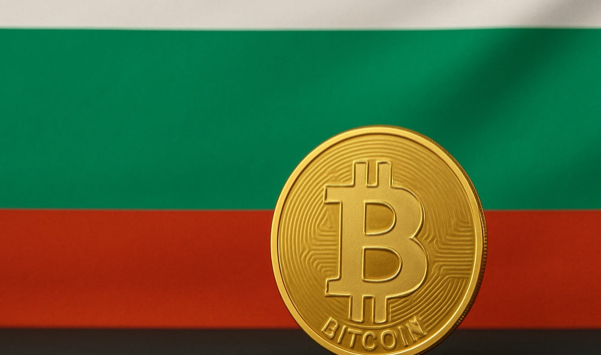
Missed Fortune Revealed
Back in 2017, Bulgaria’s authorities seized 213,000 BTC during the crackdowns on crime. At the time, the total value of that Bitcoin was around $3.5 billion. But a year later, the government sold its Bitcoin.
That same amount today would be worth more than $25 billion. Meanwhile, that is more than the country’s current national debt, which is around $24 billion, based on data from World Economics.
Some people in the crypto space wonder if the government really sold it all. There have been rumors that some of the Bitcoin was kept. But the government has always said that all the Bitcoin was sold. There is no proof that any of it was kept.
This situation has made many people ask if the Bulgarian government made the right choice. Some experts believe that selling Bitcoin was a smart move due to its volatility. In a statement, Alex Obchakevich, who runs a research company, said, “Bitcoin’s volatility makes it difficult to use it as a stable reserve.”
He said that if a country wants to hold Bitcoin, it should only keep a small amount and also have a strategy. “Limiting the share of Bitcoin to about 10-15%, phased liquidation, hedging through derivatives, and a clear legal framework to avoid macroeconomic instability are necessary,” he added.
But not everyone agrees with this. Robert Znidar, a director at Iconomi, said the real reason for the sale was that leaders didn’t understand Bitcoin well. The sale was orchestrated by an unfamiliarity with the philosophy, utility and mission of BTC, he said.
He believes things would be different today. “Considering the recognition that BTC and crypto have received in the last year, I am sure that this would not happen again,” Znidar added. He added that things would be different today because more people now trade and understand the token.
In addition, Valentin Mihov, a co-CEO of Web3 firm Enflux, said that back then, most people in power believed Bitcoin was dangerous. “Most institutions still saw Bitcoin as radioactive,” he said.
He also said the government likely sold it to play it safe. “Custody was immature. Regulation was uncertain. The EU was tightening fiscal discipline,” Mihov explained. He said that if he had to advise at the time, he would have suggested keeping some of the Bitcoin. “Even a 10 or 20% strategic hold would’ve positioned Bulgaria ahead of the curve,” he said.
Many people have now realized how Bitcoin could help the economy. Even Binance CEO Changpeng Zhao recently shared that “Bitcoin could solve most public debt,”