

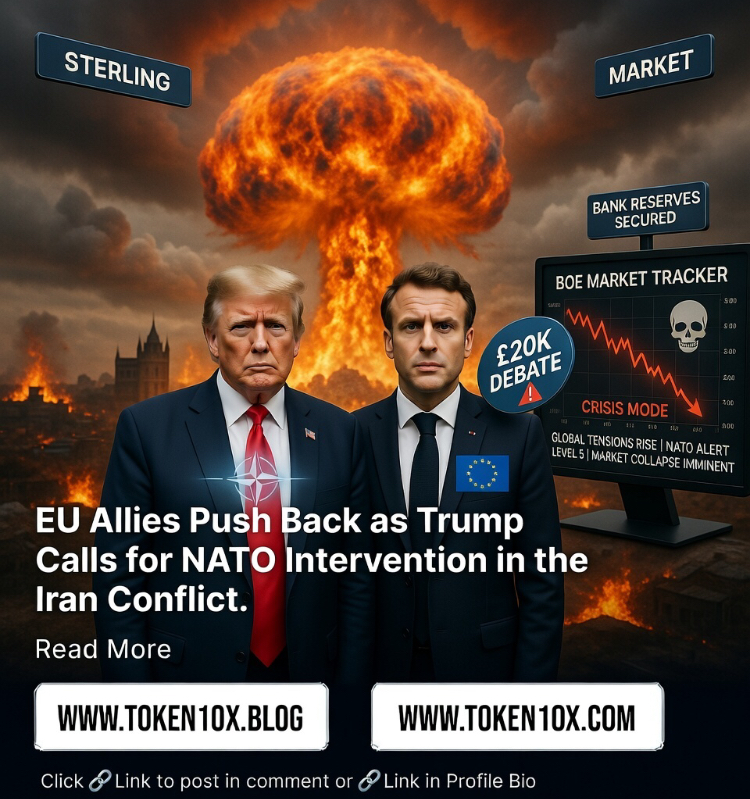
The security architecture of the Western world is facing its most significant test since 1949 as European allies demand urgent “strategic clarity” from Washington. On March 16, 2026, several key EU leaders—including those from Germany, France, and Italy—publicly distanced themselves from President Trump’s recent request for NATO military assistance in the escalating conflict with Iran. Following the President’s televised appeal for a “united front against Tehran’s maritime aggression,” high-ranking European officials have responded with a firm reminder: the Iran war is “not a NATO war,” and current treaties do not automatically trigger collective defense for operations in the Persian Gulf.
The rift centers on the interpretation of Article 5. While the U.S. argues that Iranian attacks on global energy supplies constitute a direct threat to the economic security of all member states, EU allies remain wary of being drawn into a protracted Middle Eastern ground war. German Chancellor Olaf Scholz emphasized that any NATO involvement would require a unanimous consensus that has yet to be reached, noting that European militaries are already stretched thin by ongoing security commitments in Eastern Europe. “We seek de-escalation, not expansion,” Scholz stated, highlighting a growing fear among European capitals that a full-scale regional war would trigger a fresh energy crisis and a massive new wave of migration into the EU.
The “clarity” EU allies are demanding involves a specific definition of the mission’s scope and an exit strategy. Without a formal UN mandate or a direct attack on a member state’s sovereign territory, many European nations are opting for a “neutral-support” role—offering logistical and intelligence sharing while refusing to commit boots on the ground or naval strike groups. As the Trump administration increases pressure on Brussels to “pay their fair share” of the security burden, the internal tension within NATO has reached a boiling point. For global markets, this diplomatic deadlock is creating a secondary layer of uncertainty, as the stability of the Western alliance is now as volatile as the oil prices it is trying to protect.
Discover powerful 10x crypto opportunities, impact of NATO-US tension on global markets, investing in defense and energy sectors during 2026, hedging geopolitical instability with Bitcoin, EU vs US foreign policy and market cycles, and ways to navigate global conflict and economic shifts.
Check out www.Token10x.com for more breaking news, expert crypto insights, market analysis, and high-potential investment ideas to navigate volatility and grow your portfolio.
Join & Follow Us – Exclusive Crypto Alpha & Free Training
To follow our WhatsApp channel and join our WhatsApp group to learn free crypto trading, click here