

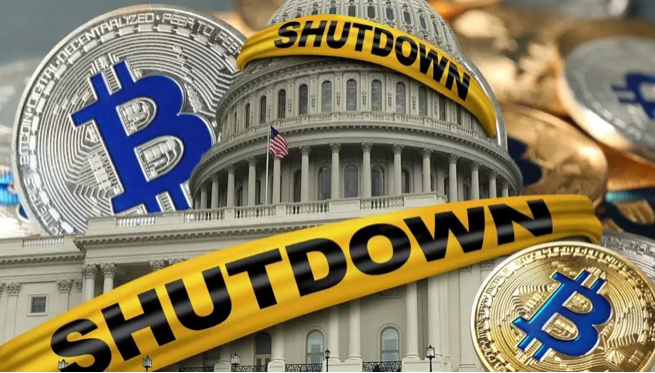
The 2025 US government shutdown, the longest in history at 43 grueling days from October 1 to November 13, left markets reeling with furloughed workers, canceled flights, and a staggering $700 billion liquidity drain from the Treasury General Account (TGA). Bitcoin enthusiasts hoped for a repeat of the 2019 post-shutdown explosion, where BTC rocketed nearly 300% from $3,500 to over $13,000 in five months, fueled by pent-up bull market energy. But instead of igniting a Bitcoin price boom, the 2025 reopening triggered a sharp 25% plunge from $117,000 to under $100,000 within a week, mirroring the initial dip but lacking the explosive recovery. What halted the anticipated Bitcoin rally after US government shutdown resolution? A toxic mix of liquidity black holes, Fed policy paralysis, and maturing crypto market dynamics crushed the hype.
At the heart of the muted Bitcoin reaction to 2025 US shutdown end lies the unprecedented liquidity crunch. During the closure, the TGA ballooned to $1 trillion, siphoning funds from risk assets like Bitcoin and spiking reverse repo usage to pandemic-era highs of $503 billion. This starved the crypto market of capital, unlike 2019 when liquidity was already rebounding from bear market lows. Analysts at BitMEX noted the shutdown’s “black hole” effect, where everyday traders faced forced liquidations on leveraged positions, amplifying the downside. Bitcoin price charts post-2025 shutdown reveal a brutal correction: after briefly spiking to $118,000 on shutdown day amid safe-haven flows, BTC tumbled as Wall Street “flew blind” without key data like CPI and jobs reports. In contrast, 2019’s rally thrived on fresh liquidity injections and global adoption waves, absent in today’s overextended cycle.
Federal Reserve uncertainty further derailed the Bitcoin surge after government shutdown 2025. Shutdown delays created a “data blindspot” for Chair Jerome Powell, stalling December rate cut bets at just 67% odds for a modest 25 basis points. Without clear inflation signals, investors shunned risk, pushing BTC into bear territory—down 20% from October highs. EY-Parthenon’s chief economist Greg Daco warned of “permanent economic loss,” echoing how 2019’s Fed pivot to easing supercharged crypto. But in 2025, quantitative tightening lingers until December, and political gridlock under the Trump administration—tied to ACA subsidy expirations and DOGE-inspired cuts—breeds volatility without the 2019-style stimulus spark.
Crypto’s evolution also explains why Bitcoin didn’t explode post-2025 US shutdown. Back in 2019, BTC was a nascent hedge in a brutal bear market, primed for 300% gains as institutional inflows kicked in. Today, with spot ETFs holding billions and trading volumes hitting $9.72 trillion monthly, the market is overcrowded and profit-taking heavy. Bitfinex analysts highlight three multi-month surges in 2025, each capped by sell-offs, leaving little room for a post-shutdown moonshot. High leverage amplified liquidations, dropping open interest 4.92% to $187 billion, while sentiment shifts—spiking Google searches for “Bitcoin crash after shutdown”—fueled panic selling.
Looking ahead, a true Bitcoin price recovery after 2025 shutdown could hinge on TGA drawdowns injecting hundreds of billions back into markets, potentially aligning with year-end seasonal strength. Yet, with broader headwinds like geopolitical easing and RRP shifts, history won’t rhyme perfectly. The 2019 magic was bull-cycle desperation; 2025 demands structural tailwinds. For traders eyeing Bitcoin rally 2025, patience is key—watch Fed minutes and Treasury flows, but don’t bet on an instant explosion. This shutdown exposed crypto’s ties to macro chaos: resilient, yes, but no longer immune to fiat’s shadows.