

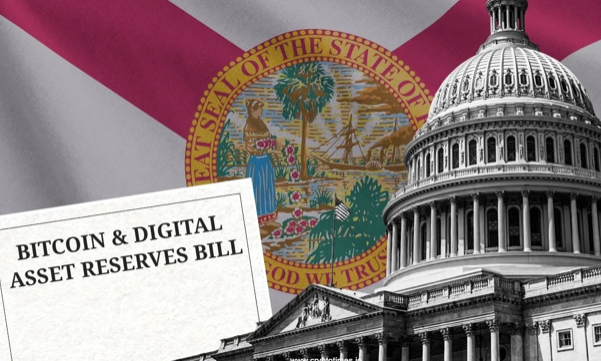
Florida lawmakers have started the 2026 legislative session with two proposals to include Bitcoin in the state’s official investment strategy and to ease regulations for stablecoin issuers in Florida. Both bills were filed on October 15 and are scheduled to take effect on July 1, 2026.
The HB 183 bill, introduced by Representative Webster Barnaby, allows the state’s Chief Financial Officer to allocate up to 10% of certain funds, including the General Revenue Fund and the Budget Stabilization Fund, into Bitcoin and other digital assets.
It defines digital assets broadly, covering Bitcoin, tokenized securities, and NFTs. The Florida Retirement System could also invest up to 10% of its System Trust Fund in these assets. It also sets strict custody rules, requiring holdings only through the CFO, a licensed custodian, or an SEC-registered ETF. Residents may pay some taxes and fees in digital assets, which will be converted to U.S. dollars and deposited into state accounts.
Alongside, Barnaby introduced HB 175, aimed at simplifying regulations for registrations for stablecoin issuers. The stablecoin bill exempts recognized payment stablecoins from separate licenses or registrations, requires issuers to be fully backed by US dollars or treasuries, and mandates monthly public audit of reserves.
Sharing an update about this bill, Webster Barnaby said on an X post, “I am proud to be running this bill to place Florida on the cutting edge of financial technology, and to set the example for other states to follow.”
Both HB 183 and HB 175 signal a coordinated push to strengthen Florida’s crypto-friendly policies.
Bitcoin supporters say the HB 183 bill aligns with the federal “Strategic Bitcoin Reserve” initiative announced in March 2025.
Further, Florida has already acted to promote digital finance by creating the Office of Fintech Policy in 2023 and a Financial Technology Sandbox in 2025. These initiatives position Florida as a leading state for cryptocurrency innovation and adoption.