

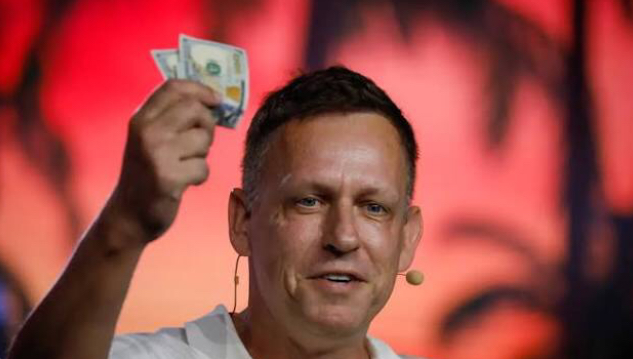
In one of the most scrutinized financial decisions in tech history, Peter Thiel, a renowned venture capitalist and co-founder of PayPal and Palantir, sold approximately 20 million shares of Facebook (now Meta) just months after the company’s initial public offering (IPO) in May 2012. This move, while profitable at the time, has since been highlighted as a missed opportunity of staggering proportions, as those shares would have been worth nearly $15 billion more had Thiel held onto them longer. The decision offers a fascinating case study in the high-stakes world of tech investing, where timing can mean the difference between a solid return and a transformative fortune.
Thiel, an early investor in Facebook through his venture capital firm Founders Fund, played a pivotal role in the company’s growth. In 2004, he invested $500,000 for a 10.2% stake, becoming one of the first outside investors to back Mark Zuckerberg’s fledgling social network. By the time of the IPO, Thiel’s stake had grown substantially, and his decision to sell a significant portion—20 million shares—shortly after the IPO was driven by a combination of market dynamics and personal investment strategy. At the time, Facebook’s IPO was rocky, with shares debuting at $38 but quickly facing volatility due to concerns over the company’s monetization prospects and technical glitches during trading. Thiel’s sale, executed at an average price estimated around $20-$30 per share, netted him hundreds of millions in profit—a substantial return on his initial investment.
However, the decision to sell early proved costly in hindsight. Over the subsequent years, Facebook’s stock soared as the company solidified its dominance in social media, expanded its advertising empire, and acquired platforms like Instagram and WhatsApp. By 2025, Meta’s stock price had climbed significantly, with valuations reflecting its status as a tech titan. Had Thiel retained those 20 million shares, their value would have ballooned to nearly $15 billion more than what he earned from the sale. This missed opportunity underscores the unpredictable nature of tech investments, where even seasoned investors like Thiel can misjudge a company’s long-term potential.
Thiel’s decision can be contextualized within his broader investment philosophy. Known for contrarian bets and a skepticism of market exuberance, Thiel may have viewed the post-IPO volatility as a signal to lock in gains rather than risk a potential downturn. Additionally, as a venture capitalist, Thiel’s strategy often involves exiting investments after a company goes public to free up capital for new ventures. Yet, this move contrasts with the “hold long” approach of investors like Warren Buffett, who advocate for retaining stakes in companies with strong fundamentals. Facebook’s trajectory proved its resilience, defying early skepticism and rewarding patient shareholders.
The $15 billion figure is a striking reminder of the stakes in tech investing. While Thiel’s sale was far from a financial misstep—his initial investment yielded massive returns—it highlights the challenge of predicting exponential growth in disruptive companies. Thiel has since focused on other ventures, including Palantir and investments in AI and biotech, but the Facebook sale remains a pivotal moment in his legacy, sparking debates about timing, risk, and the elusive art of knowing when to hold or sell.