

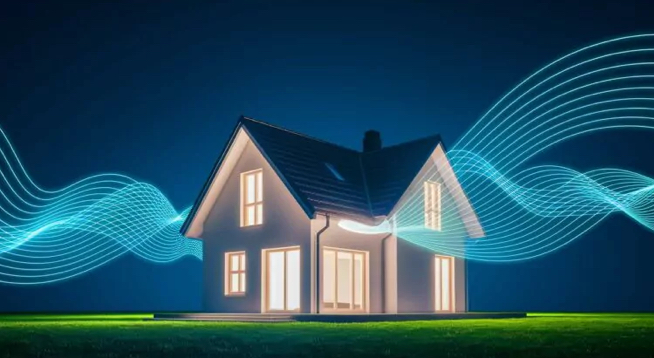
In a groundbreaking development that could redefine global energy infrastructure, scientists are on the brink of realizing a century-old dream: transmitting electricity wirelessly to power entire homes, potentially eliminating the need for traditional power lines.
A visionary leap: Wireless power beaming technology promises to transform global energy distribution by eliminating traditional power lines.
A Century-Old Vision Comes to Life
The idea of wireless energy transmission is not a new one. In 1901, visionary inventor Nikola Tesla proposed a system to send electricity through the Earth’s ionosphere. Although his ambitious project never materialized, it laid the groundwork for future innovations. Fast forward to 1964, when engineer William C. Brown successfully powered a small helicopter using microwaves. By 1975, in collaboration with NASA, Brown managed to transmit 30 kilowatts over a distance of one mile, albeit with only 50% efficiency. Today, advances in laser technology, miniaturization, and computational power have reignited interest in wireless energy.
Modern systems aim to utilize electromagnetic waves such as microwaves, radio waves, and lasers to transfer power without physical connections. A solar power station in space could theoretically transmit up to 1 gigawatt of energy—equivalent to a nuclear power plant—back to Earth. This technology represents a fusion of age-old concepts with cutting-edge advancements, bringing the dream of wireless power closer than ever.
Wireless energy transmission holds enormous potential across various fields. Imagine satellites and drones operating indefinitely without the need for battery changes, or electric vehicles charging on the go. In remote areas where infrastructure is lacking, wireless power could provide a reliable energy source without the need for extensive groundwork. Additionally, it could replace traditional backup generators with receiver antennas, offering a cleaner alternative.
Several companies, such as EMROD in New Zealand and Reach Power in the USA, are pioneering this technology, achieving up to 95% efficiency with goals to reach 99%. Nonetheless, significant challenges remain. Energy efficiency must be optimized to minimize losses, and safety protocols need to ensure human health is not at risk. Furthermore, the wavelength range of these waves requires large receiver antennas, posing another hurdle for widespread adoption. Overcoming these challenges will be essential for unlocking the full potential of wireless energy.
Unlike many futuristic technologies, wireless energy transmission is already finding practical applications. NASA is keenly interested, and companies like Powercast and Wi Charge are testing solutions to power smart sensors and retail lighting. Meanwhile, Japan’s JAXA plans to establish a space-based solar power station capable of delivering 1 gigawatt by 2030. If research and development efforts continue at the current pace, the transition to a wireless electrical grid might occur sooner than anticipated.
This technological leap could pave the way for a new era of energy distribution, potentially reshaping the global energy landscape. As these developments unfold, it is crucial to consider their implications for sustainability and energy equity. Could wireless energy be the key to solving the world’s energy challenges?