

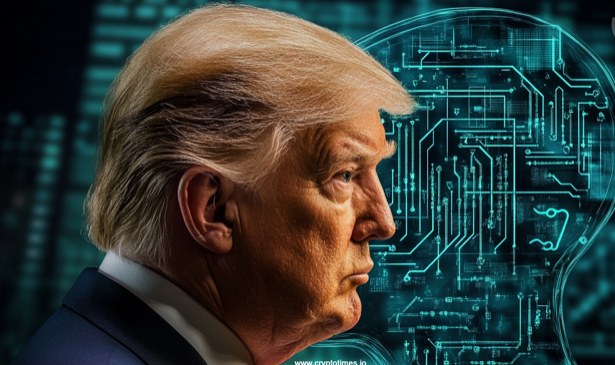
In a landmark decision, President Donald Trump signed an executive order in 2025 to introduce artificial intelligence (AI) education into U.S. schools. This bold policy aims to prepare students for a future dominated by technology, ensuring America remains a global leader in innovation. By integrating AI into K-12 curricula, funding teacher training, and fostering partnerships with tech companies, the initiative promises to transform education. But what does this mean for students, educators, and the workforce? In this article, we’ll explore the details of the executive order, its benefits, challenges, and its potential to reshape learning. Whether you’re a parent, teacher, or tech enthusiast, here’s everything you need to know about this game-changing move.
Understanding the AI Education Executive Order
The executive order sets a clear goal: equip students with AI skills to thrive in a tech-driven economy. Signed in 2025, it mandates the integration of AI concepts into public school curricula, emphasizing science, technology, engineering, and math (STEM) education. The policy includes several key components. First, it directs the Department of Education to develop AI-focused learning materials for K-12 students, covering topics like coding, machine learning basics, and AI ethics. Second, it allocates federal funding to train teachers, ensuring they’re equipped to teach these complex subjects. Finally, it encourages partnerships with tech giants like Google and Microsoft to provide schools with resources, such as software and training programs.
The rollout is expected to begin with pilot programs in select schools by 2026, with broader implementation over the next decade. According to a statement from the White House, “This order will ensure our students lead the world in AI innovation.” By prioritizing early exposure to AI, the policy aims to build a foundation for future career success.
Why AI Education Is Essential for Students
In today’s world, AI is transforming industries from healthcare to transportation. Preparing students for this reality is critical. The executive order addresses a growing need: equipping young people with skills for jobs that increasingly require tech literacy. By 2030, experts predict that most professions will involve some level of AI interaction, from data analysis to automation. Students who learn AI early will have a competitive edge in fields like software development, engineering, and even creative industries.
Beyond careers, AI education fosters critical thinking and problem-solving. Learning how algorithms work or exploring the ethics of AI encourages students to question technology’s role in society. Globally, countries like China and Singapore are already prioritizing AI in schools, making this move essential for the U.S. to stay competitive. As one educator on X noted, “Teaching AI isn’t just about tech—it’s about preparing kids to think critically in a digital world.” This initiative positions students to lead in innovation and adapt to a rapidly changing job market.
How Schools Will Adopt AI Education
Implementing AI education requires significant changes to school systems. The executive order outlines a multi-pronged approach. First, curricula will be updated to include AI-related topics. Elementary students might learn basic coding through interactive games, while high schoolers could explore machine learning or data science. Ethics will also be a focus, teaching students to consider AI’s societal impact, such as bias in algorithms.
Teacher training is another priority. The order provides federal grants to upskill educators, many of whom lack experience in AI. Programs will offer workshops and online courses, ensuring teachers can confidently deliver new content. To support this, schools will receive funding to acquire tools like laptops, software, and AI learning platforms.
Access is a key concern. The policy aims to bridge the digital divide by prioritizing underserved schools, ensuring rural and low-income students benefit. Partnerships with tech companies will provide free or discounted resources, making implementation feasible. By 2027, the Department of Education expects 25% of public schools to offer AI courses, with full coverage by 2035.
Benefits of the AI Education Initiative
The potential benefits of this initiative are far-reaching. For students, AI education opens doors to high-demand careers. Fields like cybersecurity, robotics, and healthcare increasingly rely on AI, and early exposure prepares students for these opportunities. It also builds confidence in using technology, a skill that transcends industries.
Educators stand to gain as well. Professional development programs will enhance their teaching skills and keep them updated on cutting-edge tools. Schools equipped with modern technology will create engaging learning environments, making lessons more interactive. One teacher shared on X, “AI tools could make STEM classes fun and accessible, even for kids who struggle.”
Society benefits too. A generation skilled in AI will strengthen the U.S. economy, driving innovation in industries like manufacturing and energy. By preparing students for the future, the initiative reduces the risk of job displacement due to automation. It also positions America to compete with global tech leaders, ensuring long-term economic and technological dominance.
Challenges Facing the Initiative
Despite its promise, the executive order faces hurdles. Funding is a major concern. While the policy allocates federal dollars, implementing AI education nationwide requires significant investment. Schools need updated technology, teacher training, and ongoing support, which could strain budgets. Critics argue that without clear funding plans, the initiative may fall short.
Teacher shortages pose another challenge. Many schools already struggle to hire qualified STEM educators, and finding those with AI expertise is even harder. Training programs will help, but scaling them quickly enough to meet demand is uncertain. Some educators worry about being overwhelmed by new responsibilities.
Equity is a critical issue. Rural and low-income schools often lack basic infrastructure, like reliable internet. Without targeted efforts, these communities could be left behind, widening educational gaps. Public reactions, as seen on X, are mixed. While many praise the focus on technology, others question government involvement in education, citing concerns about curriculum control.
Addressing these challenges will require collaboration between policymakers, schools, and tech companies. Pilot programs will be crucial for identifying what works before nationwide expansion.
Looking ahead, the executive order sets the stage for a tech-savvy generation. In the short term, pilot programs will test AI curricula in diverse school districts, refining approaches based on feedback. By 2028, the Department of Education aims to have AI education in 50% of public schools, with a goal of full integration by 2035.
The long-term vision is ambitious: a workforce fluent in AI, driving innovation across industries. This could position the U.S. as a global leader in technology, rivaling nations like China. Beyond economics, AI education will empower students to shape technology responsibly, addressing issues like privacy and bias.
The initiative also signals a shift in how education is viewed. By prioritizing skills for the future, it acknowledges that traditional learning must evolve. As one X user put it, “This is about teaching kids to create, not just consume, technology.” The success of this policy will depend on sustained commitment from all stakeholders.